
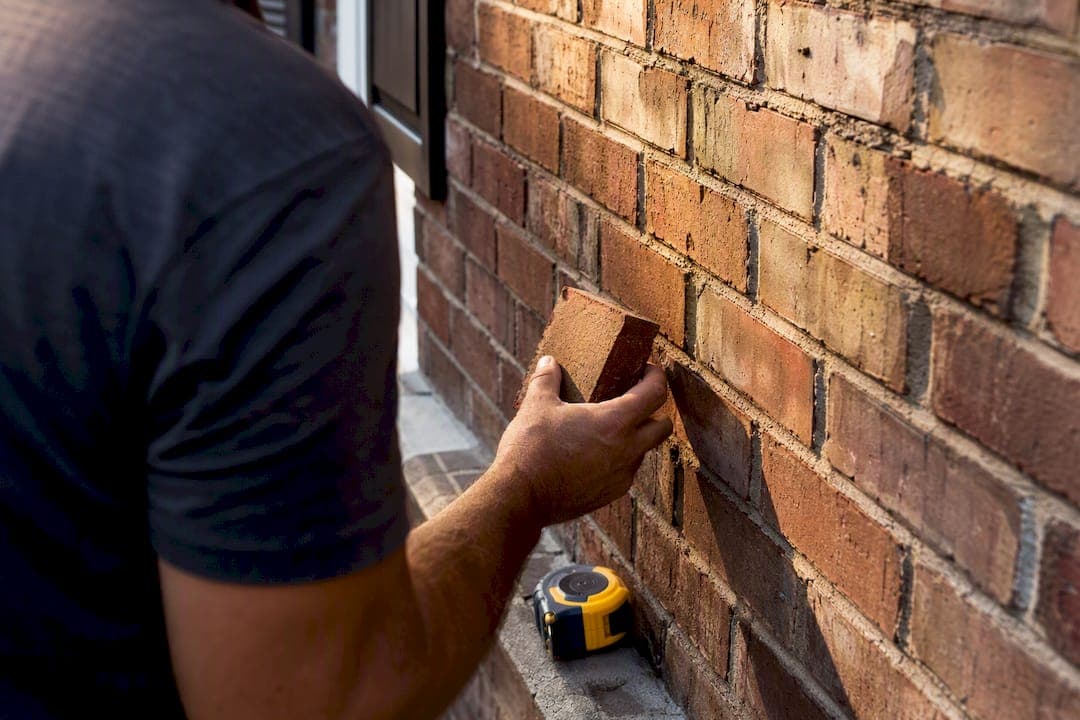
Matching old brick starts with documenting the existing units precisely, then sourcing reclaimed or manufacturer-remade brick, blending several close options, or staining to close the gap. Test any candidate for water absorption and frost resistance before you buy in bulk. As a rule, order a small sample panel first, and call a masonry contractor if the wall shows structural cracking, spalling, or covers more than a few dozen bricks.
TL;DR:
- Most repairs benefit from blending multiple close brick types and staining, rather than seeking a perfect individual match, to maintain authenticity.
- Testing sample bricks for water absorption and frost resistance is essential to ensure long-term performance before bulk purchasing.
- Reclaimed bricks offer the best patina but may be hard to source in large quantities, while manufacturer remakes and professional matching services provide more reliability and predictability.
- Building a small test panel from blended bricks and comparing it in daylight helps avoid costly mismatch surprises during installation.
- A proper match requires not only visual similarity but also matching properties like absorption, frost resistance, and joint profile to prevent future damage.
Table of Contents
- How Do You Identify the Existing Brick Before Matching It?
- Where Can You Find Bricks That Match Old Brick?
- Can You Blend Different Bricks or Stain Them to Match?
- Does the Replacement Brick Need to Match Technically, Not Just Visually?
- How Does Heritage Masonry & Brick Handle Brick Matching?
- What's the Real Trade-Off in Matching Old Brick?
- Get a Sample Panel Before You Commit to a Brick Order
- Sources
- FAQ
How Do You Identify the Existing Brick Before Matching It?
A supplier or contractor can't match what they can't see clearly. Before you call anyone, build a brief that removes the guesswork.
Start with measurements. Record the brick's length, height (also called face height), and bed depth in inches, since even a small variance here throws off coursing and joint lines. Older residential brick often runs slightly different from modern nominal sizes, and face height in particular determines whether new units will line up with existing courses without shimming.
- Measure length, face height, and bed depth on three or four bricks, not just one.
- Take three photos in natural daylight: a tight close-up showing texture and mortar joints, a mid-range shot showing the bond pattern, and a wide shot for context with a tape measure or coin in frame for scale.
- Note the mortar color and joint profile (concave, flush, extruded).
- Look for maker's marks or frog impressions on the brick face, which can help identify the original manufacturer.
- Sample 10 to 15 bricks across the wall, not just one corner, since older walls typically show real color variation from kiln placement and weathering.
That last step matters more than most homeowners expect. A single brick sample tells you almost nothing about the wall's actual color range, and matching decisions made from one brick usually blend poorly once installed. Building a small panel later depends entirely on knowing that range up front.
Pro Tip: Photograph a full section of wall, not just a close-up. A masonry supplier or brick-matching service can often narrow down a manufacturer just from the bond pattern and mortar joint style, even before seeing a physical sample.
Where Can You Find Bricks That Match Old Brick?
Three sourcing routes cover almost every repair situation, and each fits a different budget and timeline.
Reclaimed and salvage brick offers the best shot at true patina, especially for wall sections built before the 1950s when sizes and clay bodies varied more between regional brickyards. The tradeoff is availability. Salvage yards stock what they've been able to source, so finding enough matching reclaimed units for a large repair can take weeks of searching or several supplier calls.
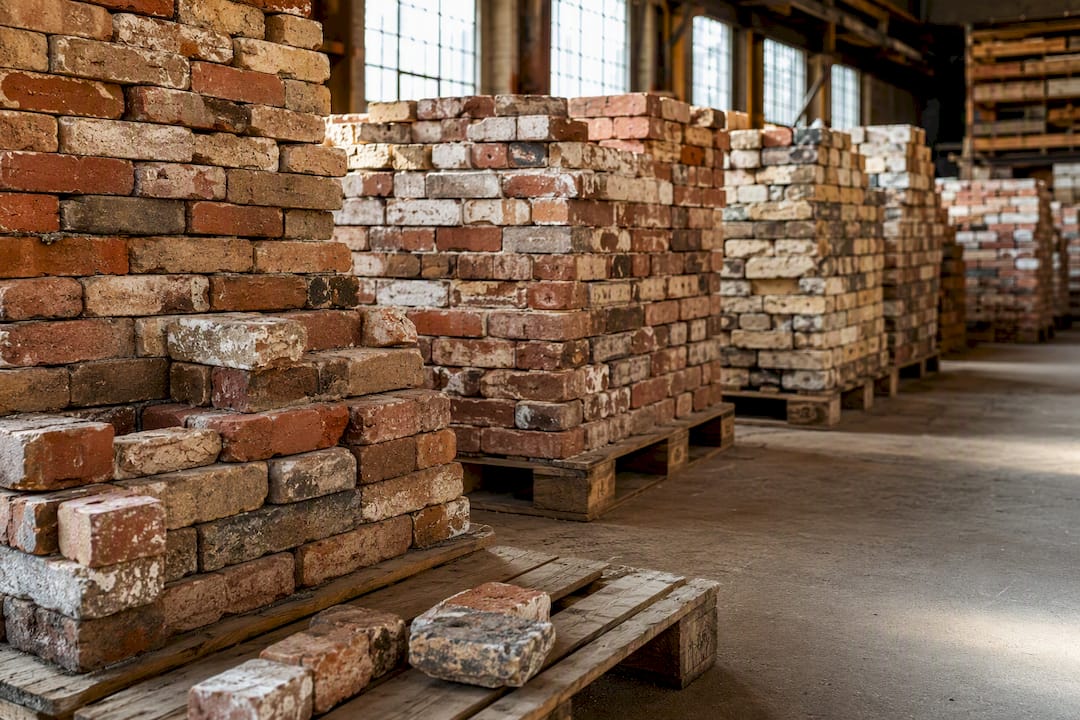
Specialty suppliers and manufacturer remakes work well when the original brick, or something close to it, is still in production. According to Building Conservation's guidance on brick matching, manufacturers can sometimes produce special molds to replicate a discontinued brick, though custom runs take real lead time and usually require a minimum order.
Professional brick-matching services fill the gap when you lack the contacts or hours to chase down a match yourself. Services like Brickhunter work from submitted photos, ship physical samples for comparison, and can recommend tinting or staining when no exact match exists.
- Reclaimed/salvage: best patina, size flexibility for older walls, unpredictable stock.
- Manufacturer remakes: reliable quality, longer lead times, often a minimum order quantity.
- Matching services: fastest research path, added cost, still requires an on-site sample check.
Order a small mixed pallet or sample panel from whichever route you choose before committing to the full quantity you need. A photo on a screen never tells the full story.
Can You Blend Different Bricks or Stain Them to Match?
Chasing one perfect brick is often the wrong goal. Most original walls already contain a range of shades from kiln variation, so a blend of two or three close brick types, arranged in the same proportions as the original, usually reads as more authentic than a single uniform match. Trade guidance on brick matching recommends sampling multiple bricks across the wall specifically to capture that color percentage before you order.
- Build a small test panel of 40 to 100 bricks in the intended mortar, mixing candidate brick types in roughly the same ratio you counted in the original wall.
- Step back and view the panel in daylight and shade before ordering the full quantity.
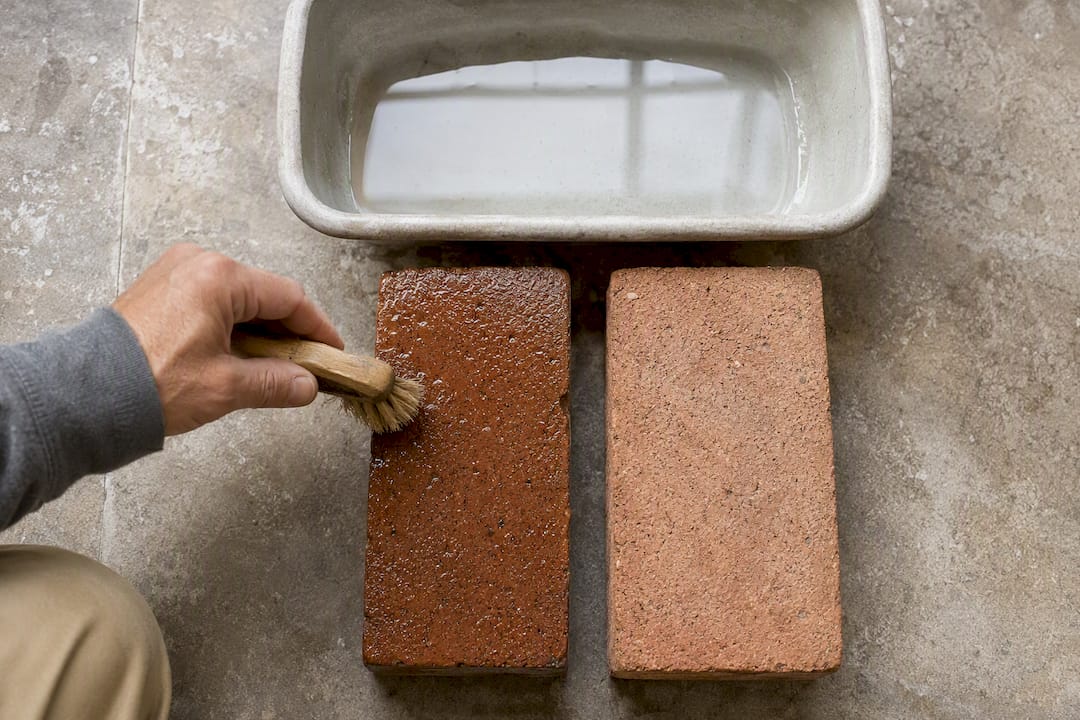
- If a color gap remains, test absorbency with a water-drop test, then apply a translucent masonry stain brick by brick rather than across the whole surface.
- Compare the stained section against the surrounding original brick a full day later, once the stain has cured.
Staining preserves the brick's natural texture while closing a color gap that no available brick quite solves on its own. The limitation is upkeep: stained sections can need touch-ups over time and aren't a fix for every surface, particularly heavily weathered or previously sealed brick.
Pro Tip: Never mix stained and unstained brick from the same production run without testing absorbency first. Two bricks that look identical dry can pull stain very differently once wet.
Does the Replacement Brick Need to Match Technically, Not Just Visually?
A visual match that fails on technical performance can cause more damage than the original problem. Water absorption and frost resistance are the two properties that matter most, and ASTM classification standards for brick exist specifically because brick from different eras and manufacturers can perform very differently side by side.
- Ask suppliers for ASTM C67 absorption data and ASTM C216 grade classification on any candidate brick.
- Confirm freeze-thaw performance if the wall sits in a climate with real winter cycling.
- Choose mortar that's slightly softer than the original brick, not harder, so the mortar joint sacrifices itself first during freeze-thaw movement instead of the brick.
- Match the existing joint profile, since a concave joint and a flush joint reflect light differently and change how closely a repair appears to match, even with identical brick.
A harder modern brick set next to soft historic brick concentrates stress at the joint, and assessment criteria for restoring versus replacing brick facades point to ASTM C67 and C666 testing as the deciding factor between a patch repair and full section replacement. When spalling, bowing, or cracking extends beyond a small area, that test result should drive the decision, not the visual match alone.
How Does Heritage Masonry & Brick Handle Brick Matching?
Heritage Masonry & Brick has spent more than 25 years repairing and restoring brick and masonry across residential and commercial properties in the Richmond area, and matching existing material is central to nearly every repair job that crosses the estimate desk.
A typical workflow starts with an on-site inspection and sampling, followed by a small mock-up panel so you can see the proposed match against your actual wall before any large order goes in. From there, the team checks mortar compatibility and joint profile, applies staining where a blend needs it, and installs the final repair backed by a 5-year workmanship guarantee.
Before requesting a free estimate, gather a few close-up photos, one wide shot of the affected wall, basic measurements, and a short description of the damage. Sending that upfront speeds up the masonry advice process considerably.
What's the Real Trade-Off in Matching Old Brick?
Most homeowner repairs don't need a perfect match. A close blend, tested on a sample panel, is usually the right call when budget or timeline matters more than museum-grade accuracy. Reclaimed or custom-molded brick earns its cost when the repair touches a highly visible facade or a home where historic integrity affects resale value. My rule of thumb: if the repair covers less than a few dozen bricks, blend and stain. Beyond that, get a professional sample panel before you spend a dollar on materials.
— Thomas
Get a Sample Panel Before You Commit to a Brick Order
Heritage Masonry & Brick gives Richmond homeowners something a bag of loose brick from a big-box store never can: a matched sample panel built from your actual wall's color range, tested for mortar and joint compatibility before a single brick goes into your facade.

The team handles the full range, from brick repairs and repointing and tuckpointing to custom staining for blends that need a final color adjustment. To get started, send a few close-up photos of the damaged area, a wider shot of the wall, basic measurements, and a short note on what's failing, whether that's crumbling mortar, cracked units, or water intrusion. From there, the company can schedule a free estimate and discuss sample panel options backed by a workmanship guarantee. Visit the Heritage Masonry & Brick service page to request your estimate.
Sources
Ask any supplier or contractor to reference these directly rather than taking a verbal assurance:
- Brick matching 101
- Brick matching — Building Conservation
- Restoring vs Replacing Brick Facades: Assessment Criteria
FAQ
Is There an App to Match Bricks?
No dedicated app reliably identifies brick from a photo alone, but brick-matching services like Brickhunter use submitted photos to narrow down candidates and ship physical samples for comparison against your wall.
Do Old Bricks Have Any Value?
Reclaimed brick, especially from pre-1950s buildings, can hold real resale value to salvage yards and preservation buyers because of its patina and often-discontinued sizing, though condition and quantity affect what a yard will pay.
What Should You Do With Outdated Brick?
Sound reclaimed brick pulled during a renovation can often be sold to a salvage yard, reused elsewhere on the property, or set aside as future patch material, since it already matches your wall's color and texture better than anything you can buy new.
Where Can You Find Matching Bricks?
Salvage yards, specialty masonry suppliers, manufacturer remakes, and paid brick-matching services all offer viable paths, and a masonry contractor like Heritage Masonry & Brick can pull from multiple sources and test a sample panel before you commit to a full order.