
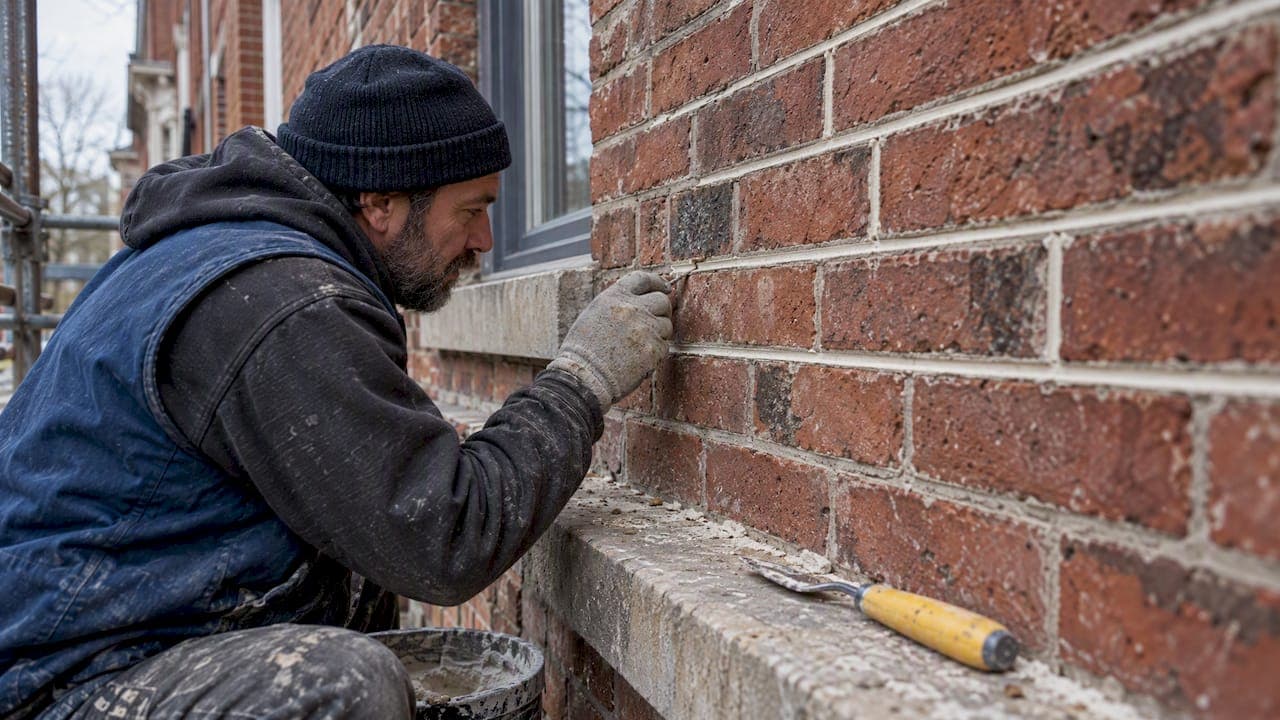
Tuckpointing is a decorative masonry technique that finishes mortar joints with a thin, contrasting ridge to mimic fine, precise brickwork, though most people use the word loosely to mean repointing, the structural repair of worn mortar joints. If your mortar is crumbling or your walls look dull, you most likely need repointing, not the decorative finish that Merriam-Webster and Britannica both describe. We see this mix-up constantly in our masonry work.
TL;DR:
- A mason should remove deteriorated mortar until reaching sound material; shallow surface work can leave weak mortar beneath the repair.
- Historic brick generally needs softer lime based mortar, because hard Portland cement can trap moisture and cause brick to crack or spall.
- Powdery mortar, gaps deeper than a quarter inch, and efflorescence signal deterioration; loose bricks or indoor dampness call for prompt professional assessment.
- Ask contractors to specify removal depth, mortar mix, and color in writing, then review a test patch and workmanship warranty before approving work.
Table of Contents
- What tuckpointing really means, then and now
- How the repair process actually works
- Choosing the right mortar matters as much as the technique
- Tuckpointing vs repointing: which one do you actually need?
- Signs your mortar joints need attention
- How long a tuckpointing or repointing job should last
- DIY touch-ups or hiring a mason: how to decide
- What preservation-first tuckpointing looks like in practice
- Why cosmetic shortcuts cost more than they save
- Get a repair plan built around your brick, not a generic mix
- FAQ
- Sources
What tuckpointing really means, then and now
Tuckpointing started as a decorative trick. Masons would lay mortar that matched the brick color, then cut a thin groove into it and fill that groove with a bright white lime putty or fine mortar. The result was a crisp, narrow ridge that made ordinary brickwork look like it was built with hairline joints, a technique Britannica confirms was prized for its precise, decorative appearance.
That's the traditional meaning. Over the decades, though, the word drifted. Most homeowners and even many contractors now say "tuckpointing" when they mean ordinary mortar joint repair, a usage Merriam-Webster records as common despite being technically imprecise.
Here's the practical distinction worth remembering:
- True tuckpointing: a two-tone decorative finish with a contrasting fillet line, rarely used today outside historic restoration.
- Common usage: a catch-all term for repointing, meaning removing and replacing deteriorated mortar.
- Repointing: the structural term preservation professionals actually use for this repair work.
Knowing which one you need changes everything about the estimate you should ask for.
How the repair process actually works
Whether you call it tuckpointing or repointing, the job follows a consistent sequence. A mason starts by inspecting every joint, checking for crumbling mortar, hairline cracks, and spots where water has clearly been getting in.
- Assess the joints. We look for soft, flaking, or missing mortar and flag areas where brick itself may be compromised.
- Remove deteriorated mortar. Old mortar gets cut out by hand or with specialized grinding tools to a depth sufficient to reach sound material, a practice the National Park Service's preservation guidance recommends ensuring the new mortar bonds properly rather than sitting on top of weak material.
- Clean the joints. Dust and debris get cleared out, sometimes with a cement and lime dissolver to loosen stubborn residue before new mortar goes in.
- Mix and test mortar. The new mortar gets mixed to match the original in strength, texture, and color, with a small test patch checked against the existing brick before full application.
- Fill and tool the joints. Mortar is packed in and tooled to the right profile. For true decorative tuckpointing, a contrasting fillet gets pressed into a groove cut along the center.
- Cure and clean. The repair cures gradually, and excess mortar gets brushed or washed from the brick face before the site is considered finished.
Pro Tip: Ask your contractor what removal depth they plan to use and why. A rushed job that skims the surface rarely lasts as long as one that reaches sound mortar underneath.
Choosing the right mortar matters as much as the technique
Mortar selection can make or break a repair, and it's where we see the most costly mistakes. Older brick, especially anything built before the mid-20th century, was typically laid with soft, lime-based mortar designed to flex and let moisture escape. Modern Portland cement mortar is far harder, and when it's used on older brick, it can trap water inside the wall and cause the brick itself to crack or spall, a risk the NPS preservation glossary specifically warns against.
- Lime-based mortar suits most historic masonry because it's softer than the brick and allows moisture movement.
- Small Portland cement additions are sometimes blended in for added durability on non-historic structures, but the ratio matters.
- Pigments and color testing ensure the repaired joints blend with existing mortar instead of standing out as an obvious patch.
Getting this right protects the brick for decades. Getting it wrong can shorten a repair's life considerably. Our guide to matching mortar walks through the testing process in more detail.
Tuckpointing vs repointing: which one do you actually need?
These two terms get used interchangeably, but they describe different goals. Repointing is the structural fix: removing failed mortar and replacing it to keep the wall sound and watertight. Tuckpointing, in its original sense, is purely decorative: the contrasting fillet line added for visual effect.
- If your mortar is crumbling, cracked, or missing, you need repointing, a structural repair.
- If your mortar is sound but you want the crisp, decorative look of fine ridge lines, that's true tuckpointing.
- Most jobs quoted as "tuckpointing" are actually repointing, so ask contractors to specify the scope in writing.
When you request an estimate, use language like "repoint the deteriorated joints" rather than just "tuckpoint the wall." It gets you an accurate quote and avoids confusion about what's actually being repaired.
Signs your mortar joints need attention
Mortar doesn't fail overnight, but once it starts going, the damage accelerates. Watch for these signs:
- Crumbling or powdery mortar that falls away when you scrape it with a key or screwdriver.
- Deep gaps or missing mortar between bricks, often more than a quarter inch deep.
- Loose or shifting bricks, which usually signal the mortar has stopped holding the wall together structurally.
- White, chalky residue (efflorescence) on the brick face, a sign that water is moving through the wall.
- Visible water stains or damp patches inside, which often trace back to failed exterior joints.
Crumbling and efflorescence are often early warnings, while loose bricks and interior water stains point to a structural issue that needs prompt attention. Left alone, deteriorated mortar tends to worsen with each freeze and thaw cycle, letting more water in and accelerating brick damage.
How long a tuckpointing or repointing job should last
A well-done repair, using mortar matched correctly to the brick, can last a long time before needing attention again. Longevity depends on a handful of factors: the skill of the mason, whether the mortar mix was right for the brick, how much the wall is exposed to weather, and whether water drains away from the foundation properly.
Routine maintenance helps stretch that lifespan. Check joints yearly for early cracking, keep gutters and downspouts directing water away from walls, and address any new staining or efflorescence before it spreads. If you notice fresh deterioration near a previous repair, it's worth having a mason reassess the area rather than waiting for it to worsen. Our article on when to repoint brick covers urgency levels in more depth.

DIY touch-ups or hiring a mason: how to decide
Small cosmetic touch-ups, like filling a single hairline crack, are reasonable DIY projects. Anything involving structural joints, large sections of wall, or historic brick calls for a professional who understands mortar compatibility.
- DIY-friendly: minor surface cracks on non-historic brick, cosmetic patching in small, low-visibility areas.
- Hire a pro: widespread crumbling, loose bricks, water intrusion, or any historic or structural masonry.
- Ask contractors directly: what removal depth they plan, what mortar mix and color they'll use, whether they'll provide a sample, and what warranty backs the work.
Pro Tip: Request a mortar color sample on a small test patch before the full job starts. It's the easiest way to avoid a visually obvious patch later.
Red flags include contractors who can't describe their mortar mix, skip the sample step, rush through the quote, or offer no workmanship warranty at all. A detailed estimate should spell out removal depth, mortar composition, and what happens if the repair fails early.
What preservation-first tuckpointing looks like in practice
We have extensive experience repairing brick and mortar, and the same principle holds on every job: matching existing materials closely enough that the repair disappears into the wall. That means testing mortar color and texture against the original brick, choosing a mix compatible with the masonry's age, and providing a workmanship guarantee. We also provide free estimates, so homeowners can see the proposed scope and mortar plan before committing to anything. Those details, what mortar we're using, how deep we're cutting, and what's covered if something goes wrong, are exactly what any homeowner should expect from a contractor doing this work.

Why cosmetic shortcuts cost more than they save
The biggest mistake we see isn't bad workmanship, it's vague scope-writing. Homeowners accept quotes that say "tuckpointing" without specifying mortar mix, removal depth, or color matching, and the repair fails years early. Ask for mortar samples and a written warranty before any mason touches your wall.
— Thomas
Get a repair plan built around your brick, not a generic mix
If your mortar joints are crumbling, loose, or letting water in, we can give you a clear, written plan for repointing or decorative tuckpointing, whichever your brick actually needs. Our estimates spell out mortar mix, color matching, and removal depth upfront, and include a workmanship guarantee on every job.

We handle brick repointing and tuckpointing, structural repairs, and chimney work across Richmond, and every estimate starts with a free, in-person site visit where we assess joint condition and walk you through the plan before any work begins. Reach out through our brick repair page to request your estimate.
FAQ
What is the purpose of tuckpointing?
Traditional tuckpointing exists to create a decorative, fine-ridged appearance on brick joints, while the term is commonly used today to describe repointing, which restores mortar that's deteriorated and protects the wall from water damage. Both share the goal of keeping joints intact, but one is primarily cosmetic and the other structural.
How much does tuckpointing usually cost?
Cost depends on the extent of damage, how accessible the walls are, and whether the work is purely cosmetic or involves structural repointing. We provide free, on-site estimates so homeowners get a cost figure based on their specific wall and mortar condition rather than a generic rate.
How long does tuckpointing last?
A correctly done repair, using mortar matched to the brick's age and exposure, can last several decades before needing further attention. Poor mortar selection or shallow removal depth tends to cause earlier failure, sometimes within just a few years.
Why is it called tuckpointing?
The name comes from the original technique of "tucking" a thin ridge of contrasting mortar or lime putty into a groove cut along the joint, creating the look of fine brickwork, a method Britannica traces to decorative masonry practice. Over time, the term broadened to cover general mortar joint repair as well.
Sources
- A glossary of historic masonry deterioration problems and preservation treatments — National Park Service
- Tuckpointing | building construction | Britannica
- tuck-point — Merriam-Webster