
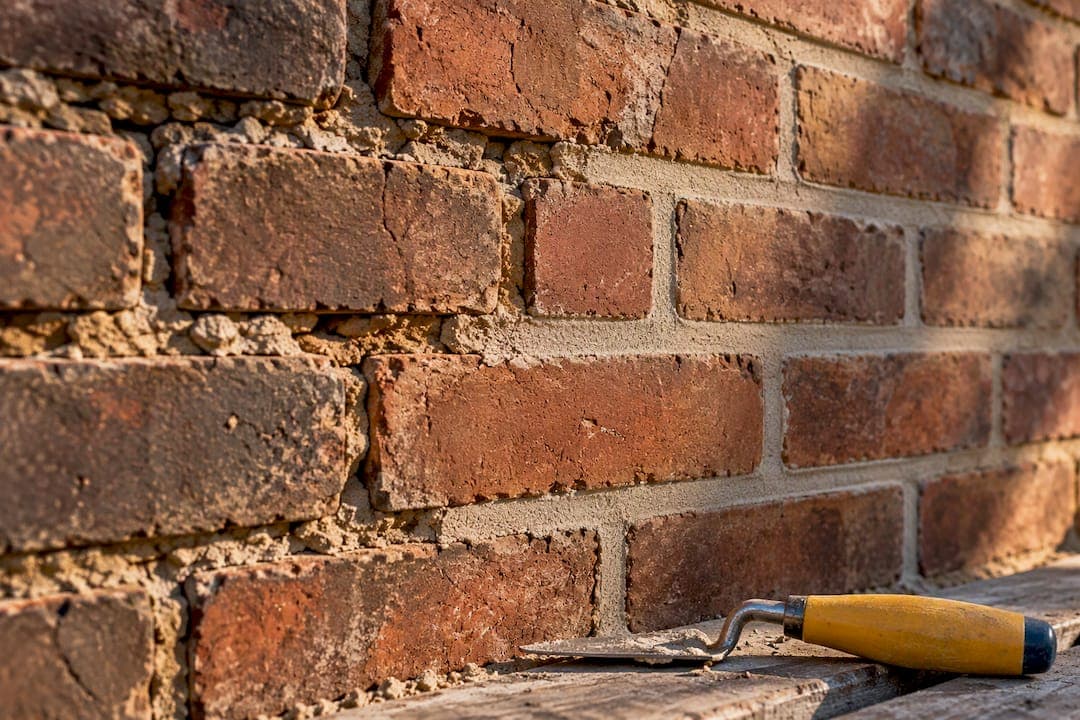
Richmond homeowners typically pay within a moderate range per square foot for tuckpointing, depending on brick condition, access, and mortar type. A small 30 square foot patch often costs a few hundred dollars to around a thousand, a chimney job may range in the low thousands, and a typical 200 to 400 square foot section can be several thousand dollars. Most Richmond masons, including Heritage Masonry & Brick, offer free on-site estimates, so the smart next step is scheduling one before you commit to a budget number.
TL;DR:
- Most tuckpointing in Richmond costs between $10 and $25 per square foot, with higher prices applying to difficult access, historic mortar, or extensive damage.
- Small 30 square foot patches typically range from $500 to $1,800, while full facades of 200 to 400 square feet can cost up to $6,000 depending on brick condition.
- Chimney work usually costs $600 to $2,500, with prices increasing for taller or more deteriorated structures due to safety and accessibility issues.
- Contractors often include a mock-up and detailed mortar matching to prevent costly mistakes, but bids significantly below market averages should be questioned.
- Weather, seasonality, and proper joint depth specification are critical factors influencing both project timeline and final cost.
Table of Contents
- Richmond cost ranges: per-square-foot bands and example totals
- Cost differences by project type (chimney, full facade, spot repairs)
- What drives price: joint depth, mortar, access, and other factors
- How to evaluate quotes: questions to ask and red flags
- Preservation-first guidance for Richmond: mortar compatibility and avoiding brick damage
- Timeline and budgeting: how long work takes and how to schedule payments
- A local mason's perspective on common Richmond tuckpointing mistakes
- How Heritage Masonry & Brick helps Richmond homeowners get it right
- Sources
- FAQ
Richmond cost ranges: per-square-foot bands and example totals
Pricing in Richmond tends to cluster into three bands. Straightforward brick with shallow joint loss on an easy-access wall falls at the lower part of the range. Moderate deterioration with some scaffolding or ladder work pushes into a mid range. Historic soft brick requiring lime mortar matching, extensive mock-ups, or difficult access can reach the higher end of typical pricing.
These bands roughly track what HomeAdvisor's Richmond listings report for local labor, where masons often charge around $70 to $110 per hour and finish mid-sized jobs in one to three days.
- A 30 to 100 square foot spot repair, common for cracked mortar around a window or porch, typically totals $500 to $1,800.
- A 200 to 400 square foot section, the size of a typical Richmond bungalow's front elevation, runs $2,000 to $6,000 depending on brick age and joint depth.
- A standard chimney, including crown inspection and flashing checks, generally costs $600 to $2,500.
Labor, driven by joint prep, mortar mixing, and finish tooling, makes up the bulk of what you're paying for and underscores the value of hiring a professional general contractor like Mr Build Co.. That's also why unusually cheap quotes deserve a second look: someone has to be cutting corners on time to hit that number.
Cost differences by project type (chimney, full facade, spot repairs)
Scope changes the math more than square footage alone.
- Chimney repointing costs more per square foot than wall work because of safety gear, roof access, and the added scrutiny of flashing and crown repair; a small chimney can still land near $600 to $1,200, while a taller or deteriorated one climbs past $2,000.
- Full facade repointing requires scaffolding and larger material orders, which raises the total but often lowers the per-square-foot rate once the mason is set up and working continuously.
- Spot repairs and single-brick replacement carry a higher per-unit labor cost because setup, mixing a small mortar batch, and cleanup take nearly as long as a bigger job.
- Decorative tuckpointing and historic detailing, where a contrasting ribbon mortar is tooled into the joint, add finish time and typically cost more than plain repointing on the same wall.
What drives price: joint depth, mortar, access, and other factors
Two quotes for the "same" job can differ by hundreds of dollars because contractors are pricing different variables.
- Joint depth and coverage: deeper deterioration and a higher percentage of the wall needing work both raise labor hours.
- Mortar type: lime-based mortars for historic brick take longer to mix and color-match than standard Portland mixes.
- Access and safety equipment: second-story work, tight side yards, or steep roof pitches add scaffolding or lift costs.
- Brick condition: spalled or cracked brick that needs replacement, not just repointing, adds material and labor.
- Season and timing: mortar cures poorly below 40°F, so winter jobs may need tenting or get pushed to spring.
- Mock-ups and permits: a required sample panel for color approval, common on older homes, adds a visit but prevents costly redos.
Pro Tip: Ask every contractor to quote joint depth in inches, not just "bad" or "moderate," so you're comparing the same scope across bids.
How to evaluate quotes: questions to ask and red flags
A good Richmond quote reads like a small contract, not a napkin estimate.
- Ask for the exact mortar mix (lime-to-sand ratio or product name) and a written commitment to a mock-up panel before full work begins.
- Confirm the tooling method: hand raking protects old brick edges, while high-speed grinders can chip them and turn a repointing job into a brick-replacement job.
- Request proof of insurance, a copy of the workmanship warranty, and a breakdown of unit prices, scaffolding fees, and estimated timeline.
- Clarify how change orders are handled if hidden brick damage turns up mid-job.
Red flags worth walking away from include a bid far below every other quote, no mention of a mock-up on a pre-1950s home, vague line items like "repointing, various," and any contractor asking for full payment in cash upfront.
Preservation-first guidance for Richmond: mortar compatibility and avoiding brick damage

Richmond's older neighborhoods, from the Fan to Church Hill, are full of soft-fired brick that predates modern manufacturing. That brick was designed to work with soft, breathable lime mortar. When a contractor repoints it with hard modern Portland cement, the mortar becomes stronger than the brick itself, and moisture that used to escape through the joint gets trapped and pushes out through the brick face instead. That's what causes spalling, and it's expensive to reverse.
The Virginia Department of Historic Resources advises repointing only the joints that are actually deteriorated, warning that unnecessary repointing can damage masonry rather than protect it. The National Park Service's preservation guidance goes further, recommending mortar matching and a physical mock-up before any wall-scale work starts.
Match the mortar to the brick, not the brick to whatever mortar is on the truck.
A written mock-up requirement in your contract, paired with a workmanship guarantee, is the simplest way to hold a contractor to that standard. Some masonry contractors back their repointing work with a workmanship guarantee for exactly this reason.
Timeline and budgeting: how long work takes and how to schedule payments
Most Richmond tuckpointing jobs move faster than homeowners expect, but the calendar and the payment schedule both matter.
- A small 30 to 100 square foot patch usually takes half a day to a full day, including mortar cure time.
- A chimney typically takes one to two days depending on flashing and crown work.
- A 200 to 400 square foot facade section runs one to three days on site, consistent with local labor patterns noted by HomeAdvisor.
- Spring and fall are the best windows, since mortar needs temperatures generally above 40°F to cure properly.
Expect a deposit at contract signing, a progress payment for larger multi-day jobs, and a final payment due only after you've inspected the finished joints. When a wall needs work across most of its surface, pricing by the whole section rather than by scattered spot repairs usually comes out cheaper per square foot.
A local mason's perspective on common Richmond tuckpointing mistakes
The mistake I see most often is a homeowner accepting a quote with no mock-up and a mortar mix nobody bothered to check against the original brick. On a Church Hill row house a few years back, a previous contractor's hard Portland patch had already started spalling brick faces within two winters, turning a $1,200 repointing job into a $4,000 brick-replacement job. A five-minute mock-up would have caught the mismatch before a single joint was cut. Heritage Masonry & Brick builds that check into every estimate now, along with the guarantee to back it.
— Thomas
How Heritage Masonry & Brick helps Richmond homeowners get it right
Heritage Masonry & Brick handles repointing and tuckpointing, chimney repair, and mortar matching across Richmond, with more than 25 years behind the approach. Every estimate is free, includes a mock-up when historic brick is involved, and comes with a five-year workmanship guarantee.

| What you get | Detail |
|---|---|
| Estimate | Free, on-site, includes joint depth and brick condition check |
| Mortar matching | Mock-up panel for color and tooling approval |
| Guarantee | 5-year workmanship guarantee |
Have your brick's approximate age and any problem areas noted before the visit, then request a brick repair estimate to get a firm number for your project.
Sources
- Repointing Mortar — Virginia Department of Historic Resources (DHR)
- Preservation Brief 2: Repointing Mortar Joints in Historic Masonry — National Park Service
- Top-Rated Brick or Stone Tuck pointing Experts in Richmond, VA | HomeAdvisor
FAQ
How much should tuckpointing cost?
Most Richmond homeowners pay between about $10 and $25 per square foot for tuckpointing, with the range set mostly by brick condition, mortar type, and access. Getting a free on-site estimate is the most reliable way to know where your specific project falls.
How much would it cost to repoint a 30 square foot brick wall?
A 30 square foot patch typically falls between $500 and $1,800 in the Richmond area, based on local per-square-foot pricing. Difficult access or historic mortar matching can push that toward the higher end of the range.
Is repointing cheaper than tuckpointing?
Repointing and true tuckpointing are different techniques rather than different price tiers, and many quotes labeled "tuckpointing" are actually standard repointing work. Cost depends more on joint depth, mortar type, and access than on which term a contractor uses.
Is tuckpointing covered by insurance?
Homeowners insurance rarely covers routine tuckpointing, since mortar wear is considered maintenance rather than sudden damage. Coverage is more likely if the deterioration resulted from a covered event, such as storm damage, so check your policy's specific language before assuming either way.