
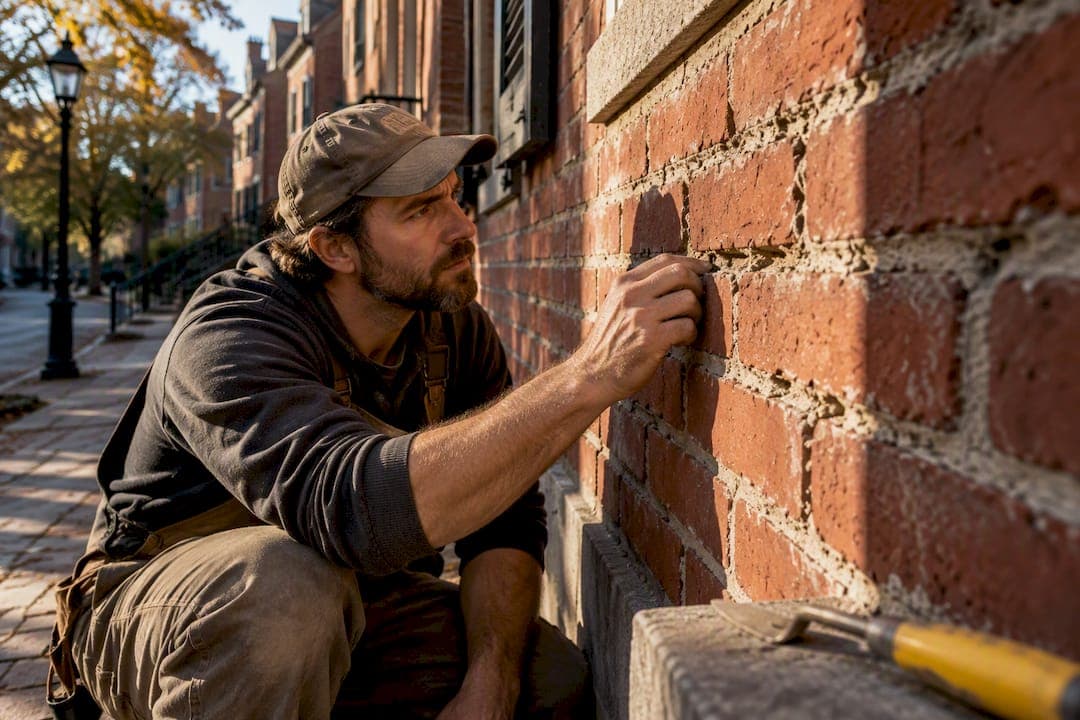
Brick repair in Richmond typically runs between $1,013 and $24,611 per project, or roughly $22 to $70 per square foot, depending on scope, access, and how closely the new brick and mortar need to match your existing facade. Most single-family repairs generally fall within a moderate cost range. Scope, matching, and access are what push a job toward either end. Before you commit to any number, get at least two written estimates from local masonry contractors who've actually walked your property.
TL;DR:
- Most brick repairs in Richmond cost between $1,013 and $24,611, with an average of about $47 per square foot, depending on scope and matching needs.
- Costs vary widely based on repair type, with tuckpointing around $36 to $50 per square foot, and full restoration near $63, while small jobs may price per project or brick.
- Access, brick matching complexity, and local labor rates significantly influence the final quote, especially for historic or hard-to-reach structures.
- Contractors should provide detailed written estimates covering scope, materials, equipment, permits, and contingencies to avoid unexpected charges.
- Heritage Masonry & Brick offers free, itemized quotes, a 5-year workmanship guarantee, and specializes in matching historic brickwork across Richmond neighborhoods.
Table of Contents
- How Much Does Brick Repair Cost in Richmond?
- What Does It Cost by Repair Type?
- What Actually Drives the Price on Your Quote?
- How Do You Get an Accurate Quote and Hire the Right Contractor?
- What Heritage Masonry & Brick Sees Across Richmond Neighborhoods
- What Extra Fees Should You Budget For?
- What Warranties Do Richmond Masonry Contractors Offer?
- A Richmond Mason's Take on Budgeting This Right
- Get a Free Estimate from Heritage Masonry & Brick
- Sources
- FAQ
How Much Does Brick Repair Cost in Richmond?
Richmond brick repair pricing splits into two categories: per-project quotes for defined jobs and per-square-foot pricing for larger facade work. HomeCostCalc's Richmond modeling puts the full range at $1,013 to $24,611, with an average project landing near $47 per square foot. That same model breaks per-square-foot pricing into three tiers: light tuckpointing around $36 per square foot, standard repair near $47, and heavier restoration work closer to $63.
Per-square-foot pricing usually applies once a job covers a continuous section of wall, like a facade or a full chimney face. Smaller, isolated repairs (a cracked step, a handful of spalled bricks near a downspout) tend to get priced per project or per brick instead, since a contractor can scope the exact material and labor needed without measuring square footage.
Three examples show how differently these jobs price out:
- A small tuckpointing patch on a porch column, covering a modest area of mortar joints, typically costs a few thousand dollars or less.
- A mid-size facade repair covering a moderate section usually costs several thousand dollars, depending on extent.
- A large-scale facade restoration on an older Richmond home, involving multiple walls and brick replacement, can be a significant investment.
Cost snapshot: Richmond brick repair averages $47 per square foot, with light tuckpointing near $36/sq ft and full restoration closer to $63/sq ft, according to HomeCostCalc's local model.
National figures from Thumbtack's masonry cost data generally track lower than Richmond's, mostly because Richmond's older housing stock (think Church Hill, the Fan, Ginter Park) often calls for historic brick matching that pushes labor and material costs above the national midpoint.
What Does It Cost by Repair Type?
Not all brick problems cost the same, even when the visible damage looks similar. Here's how the main repair categories typically price out in Richmond.
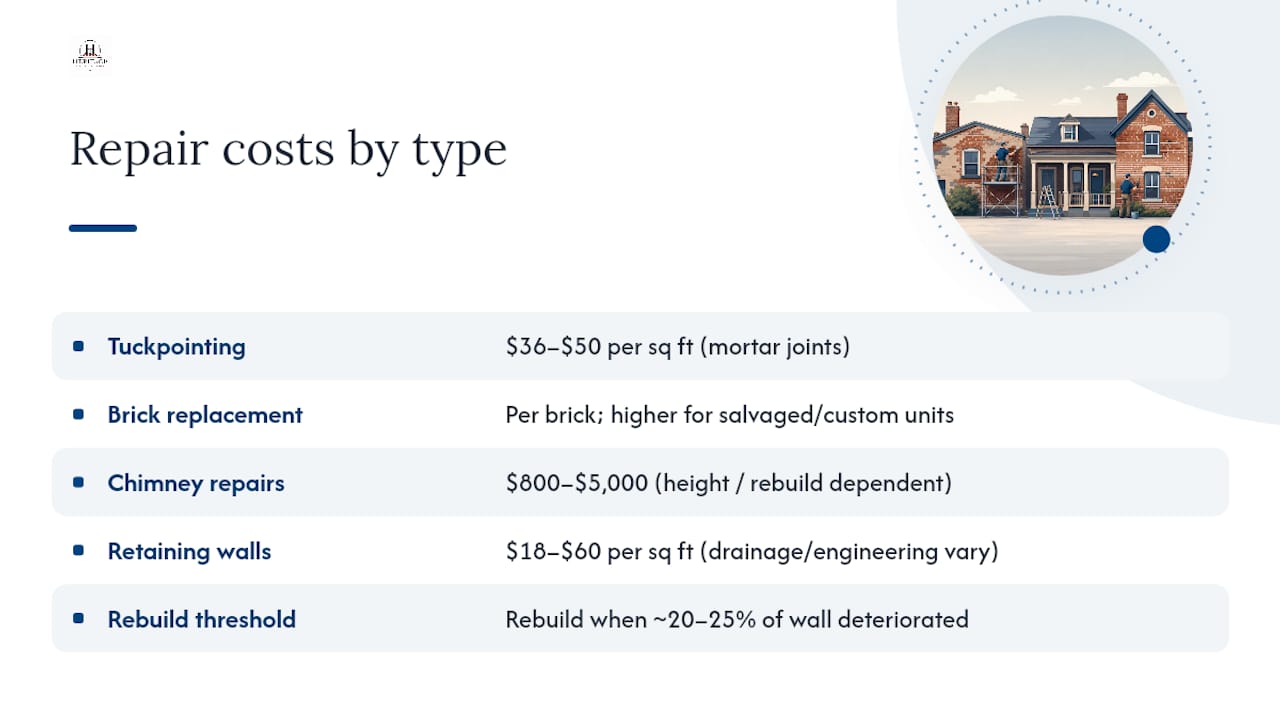
Tuckpointing and repointing addresses failing mortar joints, usually the first sign of trouble on an older home. This is priced per square foot of joint area, typically $36 to $50 per square foot depending on joint depth and mortar type. It's the least expensive category because it doesn't require removing brick, just grinding out old mortar and packing new joints. Heritage Masonry & Brick's repointing and tuckpointing service covers this work.
Brick replacement becomes necessary when individual units are cracked, spalling, or crumbling beyond what repointing can fix. Homewyse's per-brick guidance shows per-unit pricing typically runs several dollars per brick for materials and labor combined, but that number climbs fast once you need salvaged or custom-matched units for a historic facade.
Chimney repairs often combine tuckpointing, brick replacement, and sometimes a rebuilt crown or cap, which is why chimney jobs frequently land in the $800 to $5,000 range depending on height and how much rebuilding is needed above the roofline.
Steps and walkways get priced closer to a flat project rate since they involve smaller, defined areas, though structural settling underneath can add cost once uncovered.
Retaining walls vary the most, generally $18 to $60 per square foot, since drainage, backfill, and engineering concerns weigh heavily on the final number.
The replacement threshold matters most for your budget. When more than roughly 20 to 25% of a wall section shows deteriorated brick, most contractors will recommend a broader rebuild rather than spot repairs, since patchwork on that scale rarely holds up and often costs more in labor than a clean section replacement.
What Actually Drives the Price on Your Quote?
Two contractors can look at the same crumbling chimney and hand you numbers $2,000 apart. Here's what usually explains the gap.
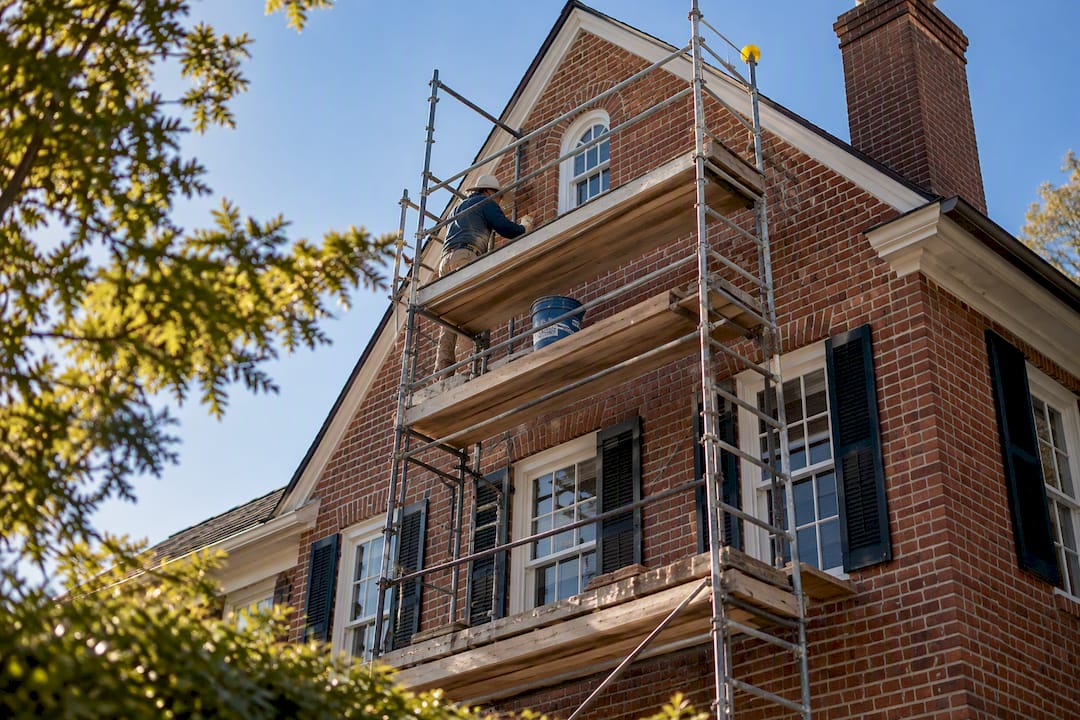
Access is the most underestimated factor. Scaffolding or a lift adds real cost, sometimes several hundred to a couple thousand dollars depending on height and rental duration, and that's before a single brick gets touched. A single-story porch repair and a three-story gable repair can carry the same material list and wildly different labor bills.
Matching brick and mortar color is skilled, time-consuming work. Getting a new patch to disappear into a 1920s facade means sourcing salvaged brick or custom-firing a match, then profiling the mortar joint to the original tooling style. Heritage Masonry & Brick's guide to matching mortar and brick walks through why this step is priced as specialized work rather than standard labor.
Labor skill level and local rates matter too. A mason trained in historic preservation techniques commands a higher rate than someone doing straightforward tuckpointing, and Richmond's labor market reflects that split.
Permits, staging, and cleanup add smaller but real line items, especially on larger jobs or projects near property lines.
Pro Tip: Ask every bidder whether their quote already includes equipment rental days. Scaffolding billed separately from the labor estimate is a common source of "surprise" charges on the final invoice.
How Do You Get an Accurate Quote and Hire the Right Contractor?
A written estimate protects you far more than a verbal number scribbled on a business card. Here's how to get one worth trusting.
Ask every bidder these questions before you compare prices:
- What's the exact scope, and does it include everything visibly damaged or just the worst spots?
- What brick and mortar will you use, and how will you match the existing color and texture?
- What's the realistic timeline, including drying or curing time?
- Do you offer a written warranty, and for how long?
- Are you insured, and can you provide references from similar Richmond projects?
- Who handles permits, and is that cost included in the quote?
A complete estimate should itemize:
- Labor, broken out separately from materials
- Material costs, including any custom or salvaged brick sourcing
- Equipment rental (scaffolding, lifts)
- Permit fees, if applicable
- Cleanup and disposal
- A contingency line for unexpected damage found once work starts
Treat a verbal-only quote, an unusually low bid with no explanation, or a contractor who can't produce proof of insurance as a red flag. A written warranty, local references, and photos from comparable Richmond jobs are the signals worth trusting.
On timelines, small tuckpointing jobs often wrap in a day or two, mid-size facade repairs take several days to a week, and full restoration projects can stretch several weeks once you factor in curing time and permit cycles.
What Heritage Masonry & Brick Sees Across Richmond Neighborhoods
After more than 25 years working on Richmond brick, certain patterns repeat: Fan District rowhouses with century-old mortar failing at the joints, Church Hill chimneys shedding brick face after decades of freeze-thaw cycles, and newer construction where builder-grade mortar simply wasn't mixed to last.
Matching matters more here than almost anywhere else in Virginia, given how much of Richmond's housing stock predates 1940; this is why durable joint repair and protective masonry coatings are essential to extend the life of historic facades like these masonry pool deck coatings, joint checks first. That often means salvaging original brick where possible or profiling mortar joints to match the original tooling rather than defaulting to a modern flush joint.
Heritage Masonry & Brick provides free estimates on every project and backs completed work with a 5-year workmanship guarantee, so you know the number you're budgeting against comes with real protection behind it.
What Extra Fees Should You Budget For?
The number on your initial estimate isn't always the number on your final invoice, and understanding why helps you budget realistically.
Disposal costs cover hauling away old brick, mortar debris, and any damaged material removed during the job. Most contractors fold this into the labor line, but larger restoration projects generating multiple dumpster loads may bill it separately.
Emergency repairs, like a chimney that's actively shedding brick or a retaining wall showing sudden bulging, often carry a premium since they require faster scheduling and sometimes temporary stabilization before the permanent fix begins.
Unexpected damage uncovered mid-project is the most common source of a revised invoice. A mason removing deteriorated mortar might find the brick behind it crumbling further than visible from the surface, or discover moisture damage to the wall structure itself. This is exactly why a 10 to 15% contingency reserve, mentioned earlier, matters more than most homeowners realize going into a project.
Seasonal scheduling can affect price indirectly. Mortar cures poorly in freezing temperatures, so winter work sometimes requires temporary heating or tenting, which adds cost. Spring and fall tend to see the highest contractor demand in Richmond, which can mean less room for schedule flexibility even if pricing stays stable.
Ask your contractor directly whether their written estimate includes a contingency allowance or whether unexpected findings get billed as a change order. Both approaches are standard, but you want to know which one you're agreeing to before work starts.
What Warranties Do Richmond Masonry Contractors Offer?
Warranty terms vary more across Richmond contractors than most homeowners expect, and the difference matters once you're comparing bids that look similar on price.
Some contractors offer no formal warranty beyond verbal assurance, which leaves you with little recourse if joints fail again within a year or two. Others offer limited warranties covering only materials, not labor, which shifts the cost of any callback repair onto you.
A workmanship guarantee, the kind that covers both labor and materials for a defined period, is the strongest protection available and worth prioritizing over a marginally lower bid. Some masonry contractors back completed projects with a workmanship guarantee covering issues tied to the original work for a defined period.
When comparing quotes, ask exactly what triggers a warranty claim, whether it transfers if you sell the property, and whether it covers mortar joint failure specifically or only structural brick issues. Get the warranty terms in writing alongside the estimate, not as a verbal add-on after you've already signed.
A Richmond Mason's Take on Budgeting This Right
If you take one thing from this guide, prioritize matching over the lowest bid. A cheap patch that clashes with your facade costs more later, both in resale value and in redo labor. Second, always ask what's included in access costs before comparing numbers side by side. Budget 10 to 15% above your accepted quote as a contingency, and you won't get blindsided by what's behind the wall.
— Thomas
Get a Free Estimate from Heritage Masonry & Brick
If you're staring at a cracked chimney or crumbling porch step and wondering where to start, a written, itemized estimate before any work begins is the recommended approach over rough verbal guesses. That's the real advantage over piecing together your own budget from online calculators: you get a number backed by a mason who's actually assessed your property and a repair backed by a 5-year workmanship guarantee.

Heritage Masonry & Brick handles brick repair, repointing and tuckpointing, structural masonry repairs, chimney repair, brick steps, and patios and walkways across Richmond. Quotes may be free, matched to existing brick and mortar when possible, and backed by local craftsmanship experience. Request your free estimate on the brick repair page and get a real number for your project this week.
Sources
This guide draws on HomeCostCalc's Richmond brick repair model, Thumbtack's national masonry cost data, Homewyse's per-brick cost calculator, and Contractor+'s Richmond-specific estimate breakdown, alongside Heritage Masonry & Brick's own service pages and field experience across Richmond neighborhoods.
- Brick Repair Cost in Richmond, VA (2026) — Free Calculator | HomeCostCalc
- 2026 Brick & Masonry Repair Cost | Get Estimates
- Cost to Repair Brick - 2026 Cost Calculator (Customizable)
FAQ
How Much Do Brick Repairs Cost in Richmond?
Most Richmond brick repairs cost between $1,013 and $24,611 per project, or roughly $22 to $70 per square foot depending on scope and matching requirements. Small tuckpointing jobs typically stay under $1,800, while full facade restorations can exceed $15,000.
How Much Does It Cost to Repair a Single Brick?
Individual brick replacement is usually priced per unit rather than per project, with Homewyse's per-brick guidance showing material and labor costs that rise quickly if the brick needs to be salvaged or custom matched for a historic facade. A single-brick swap on its own rarely makes financial sense as a standalone job, since most contractors have a minimum service call.
How Much Would It Cost to Brick a 2,000 Square Foot House?
Full brick veneer or new brickwork on a 2,000 square foot house is a substantially larger project than repair work and depends heavily on design, brick style, and whether it's new construction or a retrofit. Heritage Masonry & Brick provides new brickwork estimates based on a walk-through of the specific project rather than a generic square-footage formula.
How Much Would It Cost to Repoint a 30 Square Foot Brick Wall?
Using Richmond's tiered per-square-foot tuckpointing rates, a repointing job cost varies depending on the area and the $36 to $63 per square foot tiers from HomeCostCalc's local modeling. Actual pricing depends on joint depth, mortar type, and how accessible that section of wall is.
Does Heritage Masonry & Brick Offer Free Estimates?
Yes, Heritage Masonry & Brick provides free estimates on every brick repair project in the Richmond area. Completed work is backed by a 5-year workmanship guarantee covering both labor and materials.