
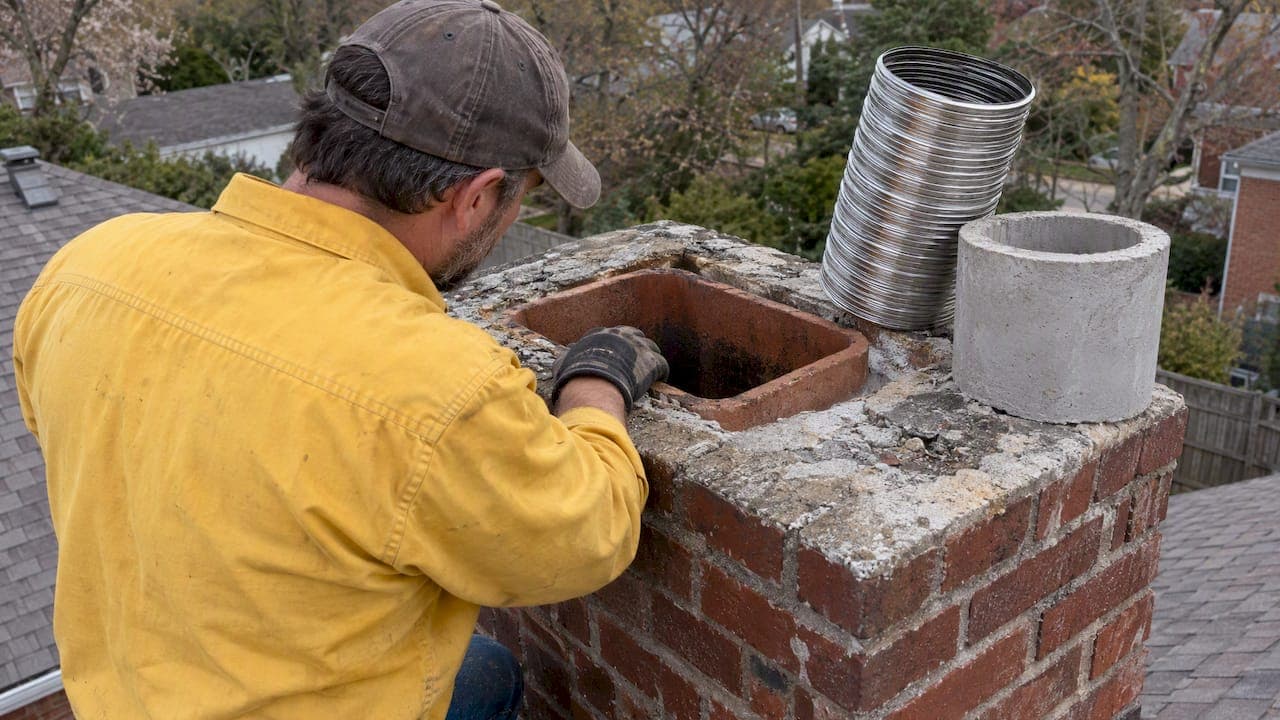
There are three common chimney liner types: clay tile, metal (stainless steel), and cast-in-place. The right choice comes down to one rule: match the liner to the connected appliance's listing, the manufacturer's instructions, and the chimney's flue geometry. Aluminum liner kits exist too, but they only suit specific lower-efficiency gas appliances, not wood or most high-efficiency equipment.
TL;DR:
- Clay tile liners remain a standard option but are vulnerable to cracking from thermal stress and water damage, especially after chimney fires.
- Stainless steel liners are flexible or rigid, resist creosote buildup, and depend on alloy grade and moisture control for longevity.
- Aluminum liners are restricted to certain low-efficiency gas appliances and are not suitable for wood or high-efficiency gas systems.
- Cast-in-place liners reinforce heavily damaged tile flues with a seamless, insulating shell suitable for unpredictable or deteriorated masonry.
- Proper liner selection requires matching the appliance’s listing, correct sizing per NFPA 211, and thorough inspection, with the lifespan influenced by material, maintenance, and flue conditions.
Table of Contents
- What does a chimney liner actually do?
- Signs you may need a liner inspection or replacement
- Clay, stainless steel, and cast-in-place: how each liner performs
- How to choose the right chimney liner for your home
- What installation, lifespan, and upkeep actually look like
- What contractors see in the field
- Why 'best liner' depends on the chimney, not the brochure
- Scheduling a liner inspection or reline with Heritage Masonry & Brick
- Sources
- FAQ
What does a chimney liner actually do?
A chimney liner contains combustion byproducts, like smoke, gases, and sparks, and directs them safely out of the home. Without one, heat and corrosive gases pass directly into masonry, speeding up decay and raising the risk of a fire reaching combustible materials near the chimney.
A properly sized, insulated liner also improves draft and keeps the appliance running efficiently, as highlighted in indoor fireplace installations that demonstrate the importance of proper liner compatibility. The 2024 IRC requires lining materials that resist corrosion, erosion, softening, or cracking at temperatures up to 1,800 degrees Fahrenheit, which is why material choice carries real safety weight.
A liner's job breaks down into a few core functions:
- Contain combustion gases and sparks so they exit through the top of the chimney.
- Protect surrounding masonry from heat and acidic condensate.
- Maintain draft strength, which supports efficient, complete combustion.
- Reduce creosote buildup by keeping flue gases warmer and the inner surface smoother.
Signs you may need a liner inspection or replacement
Several warning signs point to liner trouble before it becomes a hazard.
- Cracked, missing, or shifted clay tile sections visible during a sweep or camera inspection.
- Spalling or crumbling masonry on the chimney exterior, often from moisture working through damaged liner joints.
- Smoke entering the room, persistent odors, or soot staining around the fireplace opening.
- A prior chimney fire, which can crack tile invisibly even when the chimney still looks usable.
- Changing appliances, selling the home, or relining work, which the CSIA identifies as standard triggers for a Level 2 inspection.
A Level 2 inspection documents flue height, offsets, and any obstructions, the exact measurements an installer needs before recommending a liner.
Clay, stainless steel, and cast-in-place: how each liner performs
Clay tile has been the standard masonry liner for decades, and the CSIA's chimney fires review notes it remains the default because building codes accept ASTM C315 clay tile as the baseline lining material. Clay performs well for decades when intact, but it cracks under thermal stress and chimney fires, and water intrusion through damaged joints accelerates failure.

Stainless steel comes in flexible and rigid forms, bare or factory-insulated. DuraVent's DuraLiner is one example of a UL-listed insulated stainless system that allows zero-clearance installation and offers a smooth inner surface that resists creosote buildup. Flexible stainless handles offsets well, making it the common choice when relining an existing masonry flue with bends. Rigid stainless suits straighter runs. Alloy grade matters too: higher grades resist corrosion longer, particularly in high-moisture or high-acid conditions common with gas and oil appliances.
Aluminum liner kits are a limited-use category. Manufacturer and code guidance restricts aluminum to certain gas appliances, typically lower-efficiency units, and it is not a substitute for stainless steel in wood-burning or high-efficiency gas applications.
Cast-in-place liners use an insulating, ceramic-based cement poured or pumped around a form to create a continuous, seamless flue. This method works well for flues with heavily damaged tile, since it adds structural reinforcement and a consistent insulating layer without needing discrete sections. The finished surface is smooth, and the material cures into a rigid shell matched to the chimney's existing shape.
Clay tile has defined the industry baseline for so long that most codes still measure other systems against it: CSIA's historical review confirms clay remains the reference point even as stainless and cast-in-place options have expanded.
A factory-built, listed chimney and its matching adaptor is sometimes the correct path entirely, particularly when a masonry chimney is damaged beyond practical relining or when a new appliance calls for a specific listed system.
How to choose the right chimney liner for your home
Selecting a liner is less about personal preference and more about matching documented requirements.
- Start with the connected appliance's listing plate and manufacturer instructions, then confirm the liner carries a matching UL or listing number.
- Check sizing against NFPA 211 guidance, since round and rectangular flues use different area ratios, and undersized or oversized liners both hurt draft.
- Map the flue's offsets and overall geometry: flexible stainless handles bends, while rigid or insulated factory systems suit straighter runs.
- Ask any installer for the product's listing number, alloy grade, insulation specification, warranty terms, and whether a Level 2 inspection was completed first.
- Weigh cost against appliance requirements. A cheap aluminum kit might fit the budget, but if the appliance or code calls for stainless or cast-in-place, that lower price tag creates a real safety gap.
Pro Tip: Request the installer's measurements from the Level 2 inspection before agreeing to a liner type. Those numbers, not a sales brochure, should drive the recommendation.
What installation, lifespan, and upkeep actually look like
Relining typically follows a set sequence: inspection and cleaning, measuring the flue, selecting the liner type, then installation. Flexible stainless liners are often pulled down from the top in one continuous run. Cast-in-place systems are built in place using a form, then cured.
Lifespan varies by material and conditions:
- Clay and cast-in-place liners often last decades when the surrounding masonry stays sound and dry.
- Stainless steel lifespan depends on alloy grade and fuel type, with corrosion and persistent moisture shortening service life.
- Any liner exposed to water intrusion through a damaged cap or crown will degrade faster than one kept dry.
Flue size, height, and clearance requirements set out in NFPA 211 directly affect how long a liner performs safely, since undersized or poorly vented systems accelerate wear regardless of material. Annual inspections catch early cracking or mortar loss, and wood-burning systems need more frequent sweeping than gas appliances to control creosote.
What contractors see in the field
Field inspections turn up familiar patterns: water-damaged clay tile with crumbling mortar joints, offset misalignment from old construction shortcuts, and masonry that looks sound from the ground but fails under closer inspection. Each finding changes the recommendation.

Heritage Masonry & Brick often points toward cast-in-place lining for flues with heavy tile deterioration, since the poured liner reinforces weakened masonry while sealing the flue in one continuous piece. For chimneys that remain structurally sound, a stainless reline is usually the more direct fix. With extensive masonry experience, free estimates, and a workmanship guarantee lasting several years, the approach favors matching the repair to the actual condition found, not a one-size answer.
Why 'best liner' depends on the chimney, not the brochure
Codes tie liner choice to the connected appliance's listing and installation instructions, not to brand preference. The IRC treats clay, listed stainless systems, and factory-built chimneys as acceptable paths precisely because each fits different conditions.
Verify the appliance listing, choose a liner that matches it, and get a Level 2 inspection before relining. The right liner balances longevity, insulation, and cost against what the flue and appliance actually require.
— Thomas
Scheduling a liner inspection or reline with Heritage Masonry & Brick
A damaged flue rarely stays isolated. Cracked tile and moisture intrusion tend to spread into the surrounding brick and mortar, which is where masonry repair work and relining often overlap. Heritage Masonry & Brick handles both sides of that problem for homeowners working through chimney issues.

Services relevant to a liner project include:
- Chimney inspection and repair, covering both structural masonry and relining options such as stainless steel or cast-in-place.
- Brick repointing and tuckpointing to restore deteriorated mortar joints before or after relining.
- Structural brick and masonry repairs for chimneys with spalling, cracking, or movement.
Repairs are matched to existing materials to blend into the original structure. Homeowners ready to address a damaged flue or aging chimney can start with the chimney repairs page to request an estimate.
Sources
- CHAPTER 10 CHIMNEYS AND FIREPLACES - 2024 INTERNATIONAL RESIDENTIAL CODE (IRC)
- Level 2 inspection of a masonry fireplace — CSIA
- Chimney fires white paper — CSIA
FAQ
Are there different types of chimney liners?
Yes, the three main categories are clay tile, metal (stainless steel, flexible or rigid), and cast-in-place. Aluminum kits also exist but are restricted to certain gas appliances, as noted in code and manufacturer guidance for limited-use liner materials.
What is the best material for a chimney liner?
There is no single best material. The IRC accepts clay tile, listed stainless systems, and factory-built chimney units because the right material depends on the connected appliance's listing, fuel type, and the flue's condition.
Which chimney liner is best for a wood stove?
Wood stoves generally pair well with insulated stainless steel liners, since insulation helps maintain flue temperature and reduce creosote buildup. The appliance manufacturer's listing and instructions should confirm the exact liner specification required.
What is the longest lasting chimney liner?
Clay tile and cast-in-place liners often last decades when the surrounding masonry stays dry and intact, since both resist the daily thermal cycling that wears down thinner metal systems. Stainless steel lifespan varies more, depending on alloy grade, fuel type, and moisture exposure.
How do I know if my chimney liner needs replacing?
Cracked or missing tile sections, spalling masonry, smoke entering the room, or a prior chimney fire are all signs worth a professional look. A Level 2 inspection can confirm whether relining is needed before using the appliance again.