
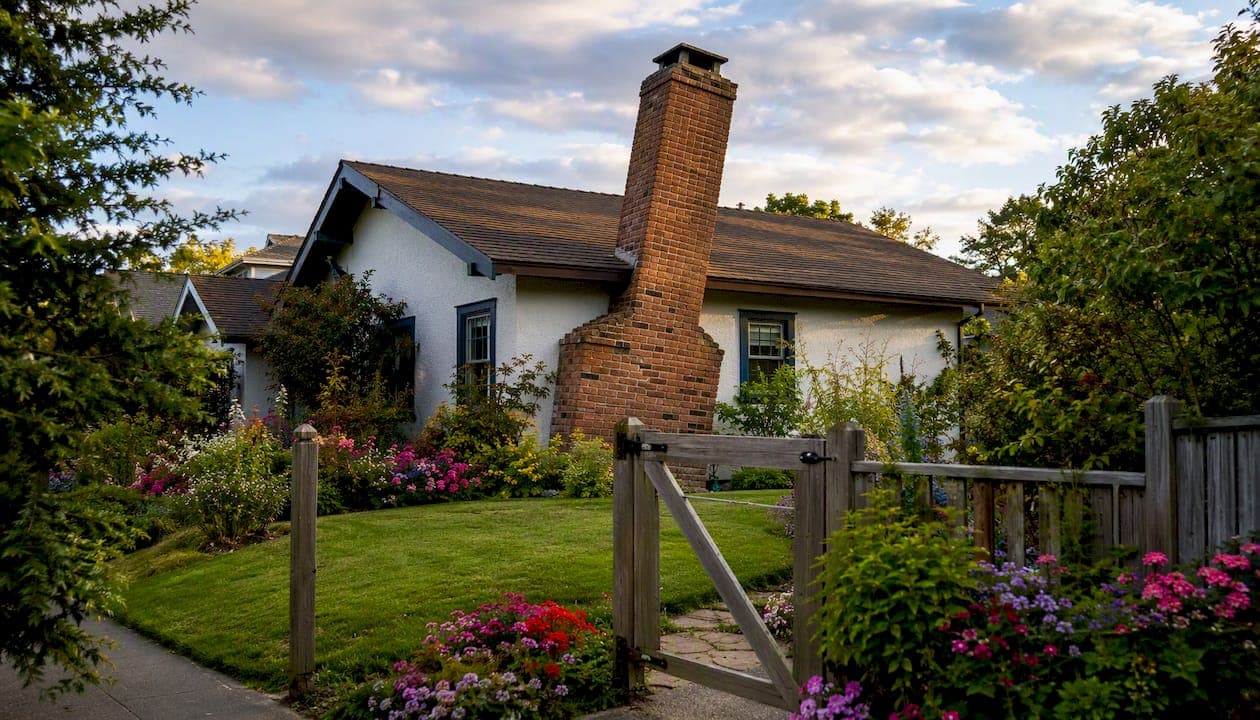
Most leaning chimneys can be fixed without a full teardown. When the problem is an isolated chimney footing that has settled, helical pier systems can stabilize and often partially lift the structure, followed by masonry restoration to close gaps and reseal the flue. The result is a structurally sound chimney at a fraction of the cost of a complete rebuild.
The key qualifier: stabilization works when the chimney footing is the single source of movement and the masonry is not severely compromised. When movement is ongoing across multiple points, or when the flue liner is cracked through, a partial or full rebuild may be the only safe path.
Your immediate next step is a professional assessment, not a patch. Heritagemasonryandbrick offers free estimates and a 5-year workmanship guarantee. A trained inspector will measure the lean, document the gap, and tell you whether you need stabilization, masonry repair, or both before any work begins.
- Most leaning chimneys are repairable through underpinning plus masonry restoration
- A visible gap signaling advanced separation requires professional evaluation
- Cosmetic fixes (caulk, cover strips) hide the problem and can trap water, making it worse
- Heritagemasonryandbrick coordinates both the stabilization and masonry phases in Richmond, VA
Table of Contents
- Why does a chimney lean in the first place?
- What does a professional chimney inspection actually cover?
- What are the real repair options for a leaning chimney?
- How much does fixing a leaning chimney cost?
- Does homeowners insurance cover a leaning chimney?
- What happens if you wait to repair a leaning chimney?
- What Heritagemasonryandbrick does when hired to fix a leaning chimney
- Key Takeaways
- The case for getting the footing right the first time
- Heritagemasonryandbrick: free estimates for Richmond homeowners
- Useful sources and further reading
Why does a chimney lean in the first place?
A leaning chimney is rarely just cosmetic. It almost always signals underlying structural distress: a missing or undersized footing, poor soil compaction, or drainage problems that have been quietly worsening for years.
Independent footing settlement is the most common culprit. Most chimneys sit on their own concrete footing, separate from the house foundation. When that footing is undersized, poured on poorly compacted fill, or sits in clay-heavy soil that swells and shrinks seasonally, it moves at a different rate than the house. The result is a visible gap between the chimney and the exterior wall, and a chimney that tilts away from the structure.
Moisture is the accelerant. Poor gutters, misdirected downspouts, and negative grading push water toward the chimney base. Freeze-thaw cycles then expand that water inside mortar joints and soil voids, widening cracks and compressing the footing further with each winter. Over several years, what started as a hairline gap becomes a structural problem.
Construction defects also play a role, particularly in older Richmond homes. A footing poured too shallow, without adequate reinforcement, or on disturbed soil may perform fine for decades before cumulative settlement crosses a visible threshold. Long-term mortar deterioration and spalling bricks compound the structural weakness once it begins.
How to read what you see:
- A gap that is wider at the top than the bottom indicates the chimney is rotating outward from the base
- A gap that is uniform top to bottom suggests the chimney is sliding or sinking straight down
- A gap greater than 1/2 inch over 4 feet is measurable structural lean that warrants professional evaluation
- Widening gaps, measured week over week, confirm active movement
Pro Tip: Photograph the gap at three points: top, middle, and bottom. Date-stamp every image and note the measurement in millimeters. Repeat monthly. A growing measurement is the clearest evidence of active movement, and that documentation will matter when you talk to a contractor or an insurance adjuster.
What does a professional chimney inspection actually cover?
Knowing what inspectors check helps you ask the right questions and get the right documentation. A thorough assessment has four distinct phases.
- Exterior visual survey. The inspector measures the chimney's plumb with a level or plumb bob, records the gap width at top, middle, and bottom, and photographs all visible cracks, spalling, and mortar deterioration. This establishes a baseline for any follow-up.
- Interior checks. The firebox, smoke chamber, and flue liner are examined for cracks, displacement, or signs of water intrusion. Attic framing near the chimney chase is checked for rot or structural contact that could be contributing to the lean.
- Footing probe and soil review. Where accessible, the inspector examines the footing condition and checks for drainage issues, soil erosion, or evidence of past water pooling at the chimney base.
- Movement determination. The inspector distinguishes between static damage (the chimney moved and stopped) and active movement (it is still moving). InspectAPedia recommends that a structural engineer be consulted when movement is ongoing, when multiple settling points are present, or when there is any suspicion that the main house foundation is involved.
Red flags that require urgent action:
- A new or widening gap since the last observation
- Loose or falling bricks anywhere on the chimney
- Cracks that run through the flue liner, not just the exterior masonry
- Visible bulging in the chimney stack
- Any rapid change in lean over a short period
What to request in writing: plumb measurements with dates, a full photo set, an engineering report if movement is active, and a written repair scope that specifies materials, timeline, and warranty terms. Without this documentation, comparing contractor quotes is guesswork, and supporting an insurance claim becomes much harder.
What are the real repair options for a leaning chimney?
The industry separates chimney leaning solutions into two broad categories: stabilize the footing and restore the masonry, or rebuild. The right choice depends on how far the chimney has moved, whether movement is ongoing, and the condition of the flue liner.
Stabilization with helical piers
Helical pier systems are the standard, cost-effective, minimally invasive method for stopping chimney settlement. Steel shafts with helical plates are driven into stable soil beneath the chimney footing using hydraulic equipment. Once the piers reach load-bearing capacity, they transfer the chimney's weight off the failing footing and onto competent soil. In many cases, controlled lifting can partially close the gap.
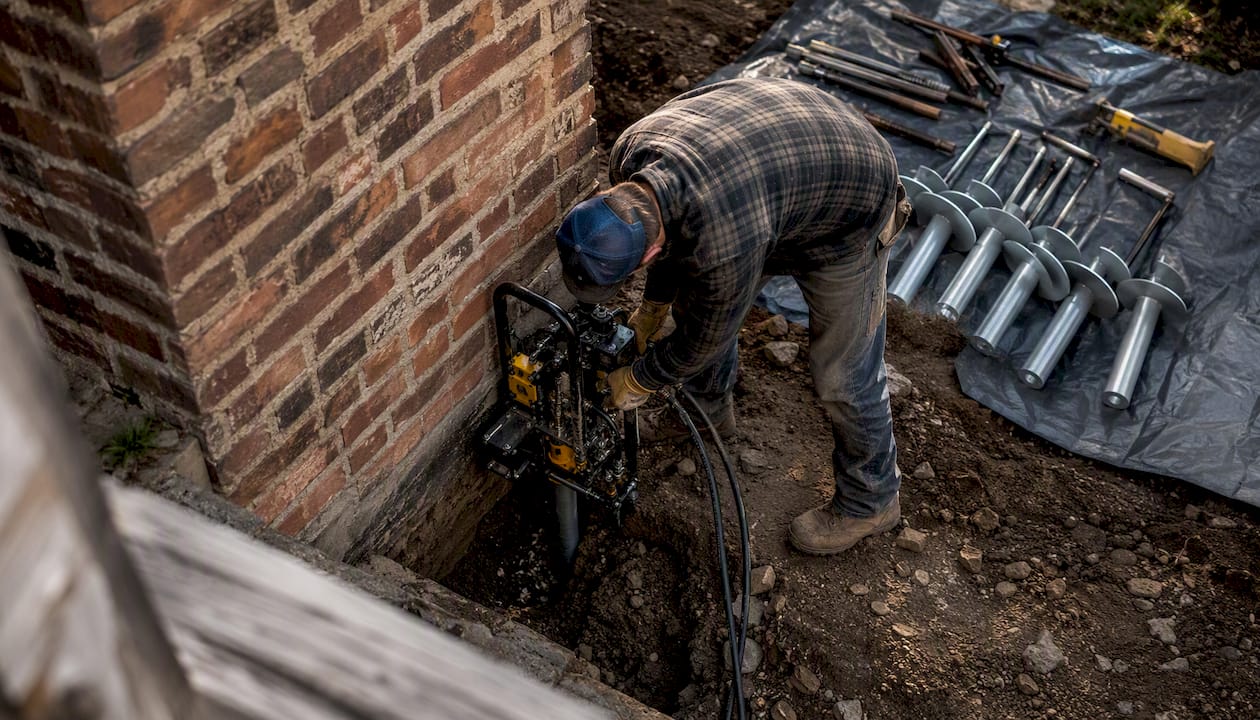
Helical piers are preferred for chimney-specific underpinning because they can be installed in tight spaces adjacent to the chimney base and rely on soil torque capacity rather than requiring the heavier building mass that some push-pier systems need. After stabilization, masonry restoration follows: tuckpointing, brick replacement, flashing repair, and flue relining if internal cracks are present.
Pros: minimal excavation, targeted to the chimney footing, preserves existing masonry where possible, cost-effective compared to rebuild. Cons: may not fully close a large visible gap; masonry restoration is still required after stabilization; not appropriate when the flue liner is severely damaged.
Partial or full chimney rebuild
When masonry damage is severe, the flue liner is cracked through, or movement is ongoing and cannot be safely arrested by underpinning, a partial or full rebuild is the correct path. The damaged section is dismantled, a new properly sized footing is poured, and the chimney is rebuilt with matching materials. This is more disruptive and more expensive, but it is the only durable solution when the structure is too compromised to stabilize.
Other methods and their limits
Slab jacking (pumping grout beneath the footing) can work for minor settlement on stable soil but is less precise than helical piers for chimney applications. Lateral tie-backs and wall anchors are sometimes used as secondary support after footing stabilization, but strapping alone fails when the root cause is an inadequate footing. Lateral ties cannot hold chimney mass if the footing continues to tip or sink. Flue relining is a separate but often concurrent repair when internal cracks create fire or carbon monoxide risk.
| Solution type | Typical cost range | Site disruption | Expected durability | When it fits |
|---|---|---|---|---|
| Helical pier stabilization + masonry repair | mid-thousands to low five-figures | Minimal excavation, 1–5 days on-site | Long-term with proper masonry follow-up | Isolated footing settlement, static or early active movement |
| Partial rebuild | higher cost | Moderate; scaffold may be needed | Decades with correct footing | Severe masonry damage, limited flue damage |
| Full chimney rebuild | highest cost | Significant; 1–2+ weeks | Decades | Ongoing movement, severe flue damage, failed footing |
| Tuckpointing / flashing only | a few hundred to a few thousand dollars | Minimal | decades for mortar joints | Static damage only, footing is sound |
Pro Tip: Always confirm that a contractor's quote separates the stabilization scope from the masonry restoration scope. A quote that bundles both without itemizing makes it impossible to verify that the footing work was actually done, not just the cosmetic repair.
How much does fixing a leaning chimney cost?
Cost ranges for chimney stability issues vary widely, driven by severity, soil conditions, access, and how much masonry work follows the structural repair. Minor tuckpointing or crack repair on a chimney with a sound footing often costs a few hundred to a few thousand dollars. Pier-based stabilization combined with masonry repair typically falls in the mid-thousands to low five-figures depending on severity. A full chimney rebuild is usually more expensive, depending on chimney height, material matching requirements, and whether a new flue liner is needed.
| Repair scope | Typical range | Main cost drivers |
|---|---|---|
| Tuckpointing / minor crack repair | a few hundred to a few thousand dollars | Linear footage of mortar, accessibility |
| Helical pier stabilization with basic masonry | mid-thousands to low five-figures | Number/depth of piers, soil conditions, masonry extent |
| Partial rebuild (above roofline) | higher cost | Height, material matching, flue liner condition |
| Full chimney rebuild | highest cost | Height, footing work, liner, access, permits |
Cost ranges vary widely depending on project specifics.
Timeline expectations:
- Initial inspection and engineering review: varies by complexity
- Helical pier installation: usually a few days on-site
- Masonry restoration: duration depends on scope
- Full rebuild: can take several weeks including curing time
Cost drivers to watch:
- Severity of lean and number of piers required
- Depth to stable soil (deeper piers cost more)
- Access constraints (tight side yards, landscaping, fencing)
- Permit requirements and structural engineering fees
- Extent of brick replacement and flue relining
Get at least two written quotes. Each should specify the repair scope, materials, timeline, warranty terms, and whether permits and engineering are included. A quote that omits any of those elements is incomplete.
Does homeowners insurance cover a leaning chimney?
Coverage depends almost entirely on cause. Insurance commonly denies claims for chimney movement when the cause is gradual foundation settlement, because most standard homeowners policies exclude maintenance issues and long-term deterioration. Coverage is more likely when the movement resulted from a sudden, covered peril such as a vehicle impact, earthquake (if covered), or a specific storm event.
Documentation that supports a claim:
- Dated photographs showing the gap and lean, ideally with before-and-after comparisons
- An inspector or engineer report that states the cause clearly
- Contractor scopes that describe the damage and required repairs
- Any evidence of a sudden peril if one occurred (storm records, incident reports)
Before hiring anyone, notify your insurer if you believe a covered event contributed to the damage. An adjuster may want to inspect before repairs begin. Getting a professional cause assessment in writing protects you from a denial based on insufficient evidence.
Contractor warranties are a separate layer of protection. Heritagemasonryandbrick backs its work with a 5-year workmanship guarantee. Before signing any contract, confirm in writing: what the warranty covers, how long it lasts, and what conditions could void it. A reputable contractor will have no hesitation putting those terms on paper.
What happens if you wait to repair a leaning chimney?
Active movement does not pause on its own. A chimney that is measurably shifting this season will be worse by spring, and the repair cost grows with every inch of additional lean.
Risks of deferred repair:
- Mortar joints crack further, allowing water into the masonry core
- Flue liner displacement creates fire and carbon monoxide hazards
- Water intrusion accelerates rot in adjacent roof framing and wall sheathing
- Loose bricks become a falling hazard for anyone near the chimney
- A small, early gap that costs mid-thousands to stabilize can become a full rebuild scenario if the footing continues to fail
A leaning or separating chimney that is left unaddressed can ultimately lead to masonry collapse. The structural risk is real, not theoretical.
Pro Tip: If you are waiting on an estimate or an engineering report, take two immediate steps: cordon off the area directly below and around the chimney, and stop using the fireplace until the flue liner has been inspected. A cracked liner is a fire risk regardless of how the chimney looks from outside. Temporary cosmetic fixes like caulk or metal cover strips are not substitutes for footing stabilization. They hide the gap, trap moisture, and mask ongoing movement.
What Heritagemasonryandbrick does when hired to fix a leaning chimney
The repair process follows a specific sequence. Skipping steps, or reversing them, produces repairs that fail within a few seasons.
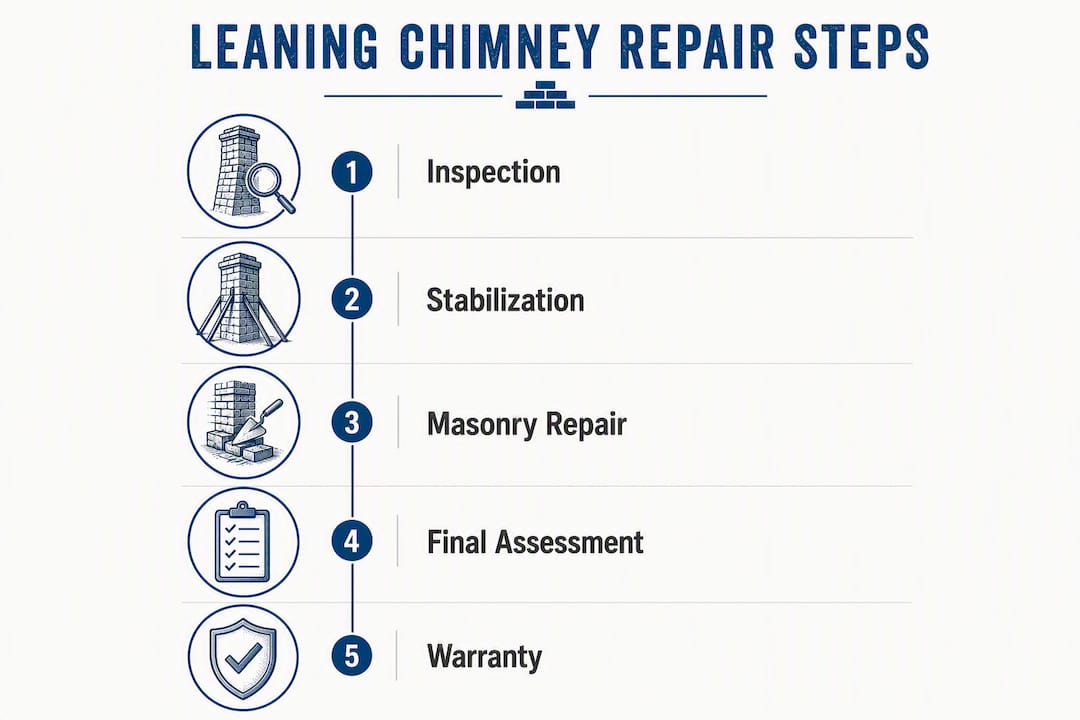
- Free site visit and assessment. A Heritagemasonryandbrick technician conducts a full exterior and interior visual survey, measures the plumb and gap at multiple points, photographs all damage, and provides a written recommendation. If movement appears active or the footing condition is uncertain, the assessment will include a recommendation for structural engineering involvement.
- Engineering and permitting (when required). For active movement or complex footing conditions, Heritagemasonryandbrick coordinates with a structural engineer to produce a repair plan and obtains any required permits before work begins. This step protects the homeowner and ensures the repair meets local code.
- Footing stabilization. Helical piers are installed beneath the chimney footing to transfer load to stable soil and stop settlement. Where conditions allow, controlled lifting partially closes the gap. The correct order of operations is stabilization first, masonry second. Reversing that sequence produces cosmetic repairs that fail when the footing continues to move.
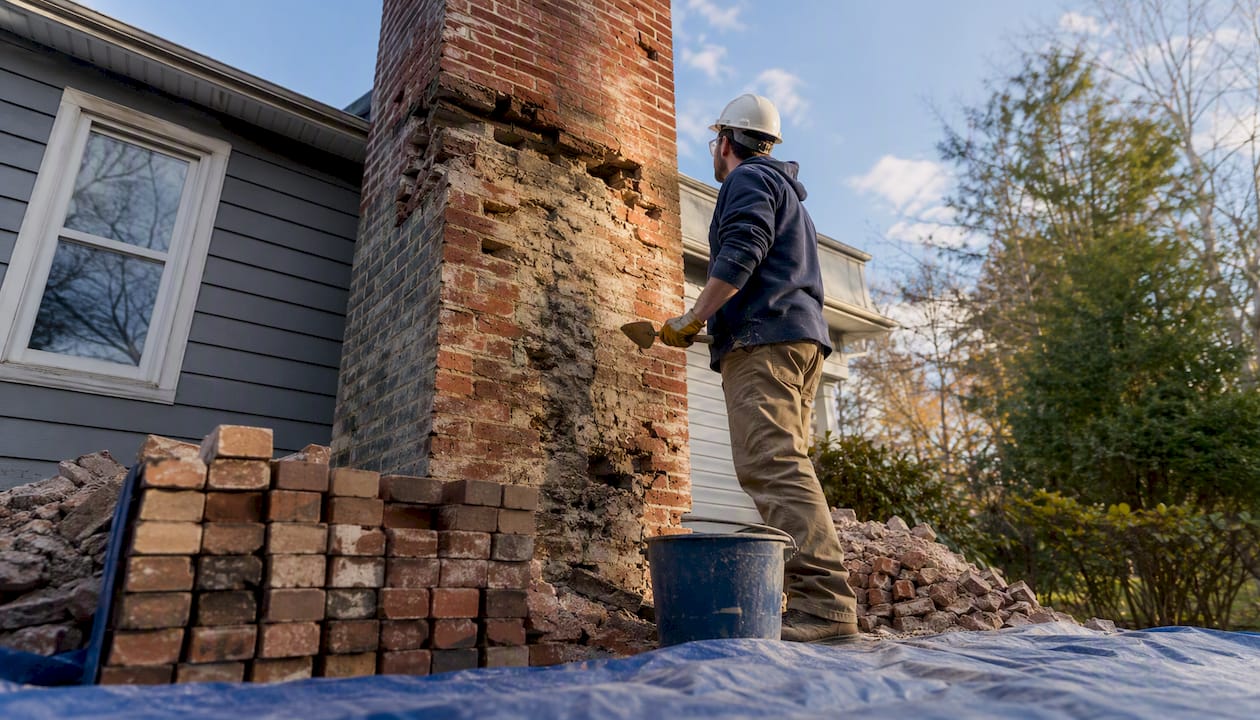
- Masonry restoration. After the structure has settled into its corrected position, the masonry work begins: tuckpointing deteriorated joints, replacing damaged bricks with matched materials, repairing or replacing flashing, and relining the flue if internal cracks were found. Flexible joint sealant is applied at the chimney-to-wall interface to accommodate minor future thermal movement.
- Final inspection and documentation. The completed repair is photographed, measurements are recorded, and the homeowner receives written documentation of the scope, materials used, and warranty terms.
"Combining foundation expertise with masonry skills is what separates a durable chimney repair from a temporary patch. A foundation specialist stabilizes the footing while a skilled mason completes the restoration and flashing repairs — both scopes are required for long-term success." — Chimney foundation repair guidance
Trust signals homeowners should look for:
- 25+ years of local masonry experience in Richmond, VA
- Free written estimates with itemized scope
- Documented before-and-after photos for comparable projects
- A 5-year workmanship guarantee in writing
- Clear communication about when an engineer is needed and why
Key Takeaways
A leaning chimney is a structural problem, not a cosmetic one. Stabilizing the footing with helical piers, followed by professional masonry restoration, is the most cost-effective path for most homeowners.
| Point | Details |
|---|---|
| Stabilization beats rebuild in most cases | Helical pier underpinning stops settlement and preserves existing masonry when the footing is the sole cause. |
| Gap over 1/2 inch signals urgency | A visible gap indicates advanced separation requiring professional evaluation now. |
| Cosmetic fixes make things worse | Caulk and cover strips hide active movement and trap moisture, accelerating hidden damage. |
| Insurance hinges on cause | Gradual settlement is typically excluded; sudden covered perils may qualify, but documentation is required. |
| Heritagemasonryandbrick covers both scopes | Free estimates, helical pier coordination, full masonry restoration, and a 5-year workmanship guarantee in Richmond, VA. |
The case for getting the footing right the first time
Most homeowners who contact a chimney repair contractor are focused on the gap they can see. That is understandable. But the gap is a symptom, not the problem. The problem is underground, in a footing that has moved and will keep moving unless it is addressed directly.
What gets overlooked in most online discussions of chimney alignment services is how often the masonry repair is done first, or done alone, because it is faster and cheaper to quote. A contractor who fills gaps and repoints mortar without addressing the footing is selling a repair that will fail. The mortar will crack again. The gap will reopen. And the homeowner will pay twice.
The stabilization-first philosophy is not just the technically correct approach. It is the only approach that produces a repair worth warranting. Heritagemasonryandbrick's 5-year workmanship guarantee is only possible because the underlying footing work is done before the masonry restoration begins. A guarantee on cosmetic work over an unstabilized footing is not a guarantee at all.
Homeowners should also push back on any contractor who dismisses engineering involvement for active movement. An engineering report costs money upfront, but it defines the repair scope precisely, protects against over-selling unnecessary work, and provides documentation that supports both the repair and any insurance conversation. Skipping it to save a few hundred dollars on a five-figure repair is a poor trade.
Heritagemasonryandbrick: free estimates for Richmond homeowners
Heritagemasonryandbrick brings over 25 years of masonry expertise to leaning chimney repairs in Richmond, VA. The concrete advantage here is that both scopes, footing stabilization and masonry restoration, are handled under one contractor relationship, with one warranty and one point of contact. Homeowners do not have to coordinate a foundation specialist and a mason separately or worry about gaps in accountability between two crews.

The 5-year workmanship guarantee covers the full repair scope, from pier installation coordination through tuckpointing and flashing. Free estimates include a written scope, timeline, and warranty terms so you can compare quotes on equal footing. Heritagemasonryandbrick's chimney repair services page details typical scopes and the repair process.
Call 804-324-6304 or use the contact form at heritagemasonryandbrick.com to schedule your free inspection. If you are also dealing with deteriorated mortar joints or spalling bricks beyond the chimney, the brick repair and repointing services cover those scopes as well.
Useful sources and further reading
The sources below were used in researching this article and are worth consulting directly for additional detail on diagnosis, repair methods, and cost guidance.
| Source | What it covers |
|---|---|
| Foundation Integrity Authority: Chimney Separation | Root causes of chimney separation, measurement thresholds, and correct repair sequence |
| InspectAPedia: Chimney Movement Ongoing vs. Static | How inspectors distinguish active from static movement; when to involve a structural engineer |
| InspectAPedia: Leaning Chimney Repair Methods | Detailed breakdown of repair options including helical piers, push piers, slab jacking, and rebuild criteria |
| Bob Vila: Tilting Chimney Repair | Homeowner-facing overview of repair options, helical pier systems, and insurance considerations |
| Full Service Chimney: Chimney Repair Cost | Cost ranges for common chimney repairs with notes on variability by scope and region |
| VFS Works: Chimney Foundation Repair | Explains the two-scope approach: foundation stabilization plus masonry restoration |