
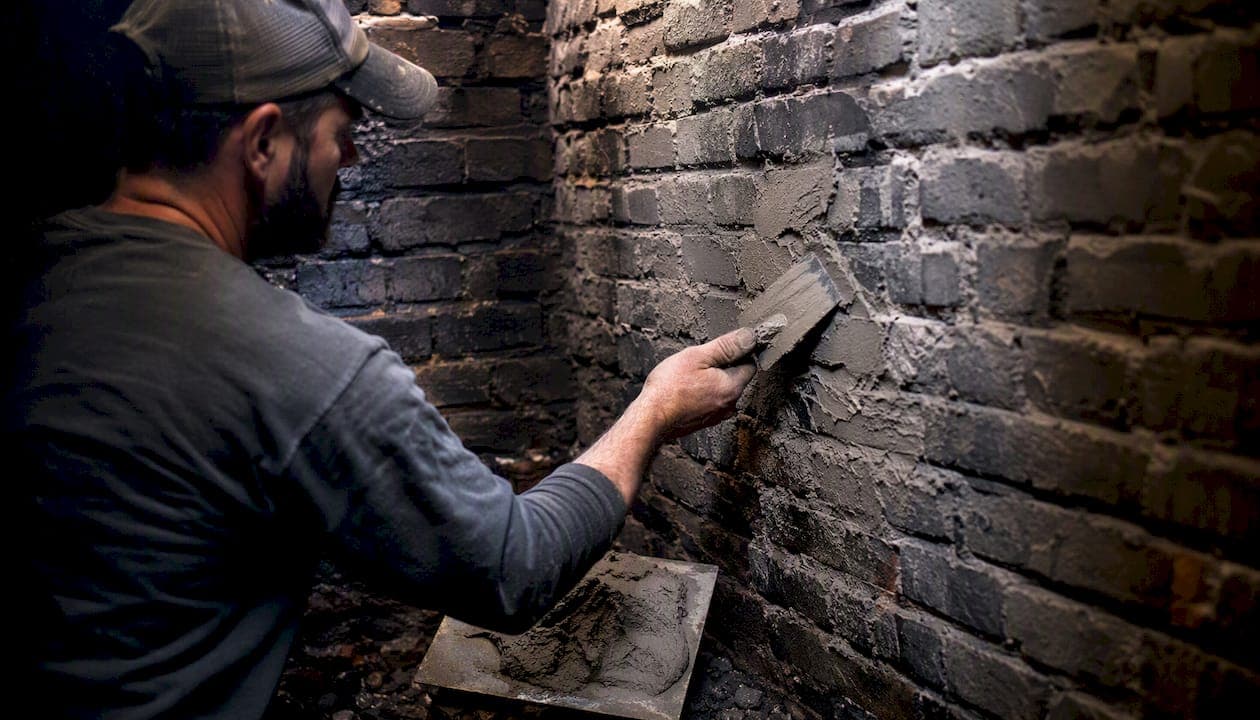
Smoke chamber parging is the process of applying a refractory mortar compound to the interior walls of your fireplace's smoke chamber to create a smooth, code-compliant surface. If you see smoke spilling into the room, notice stepped or corbelled brickwork above the firebox, or spot crumbling mortar during a flashlight inspection, your smoke chamber likely needs parging. Professional jobs typically run $1,000–$2,000 depending on damage and access, though extensive reconstruction pushes costs higher. The decision rule is straightforward: visible corbeling, backdrafting smoke, or structural cracks mean you call a certified mason or chimney sweep. Minor cosmetic smoothing on an otherwise sound chamber may be within reach for a skilled DIYer using the right refractory product, but most homeowners are better served by professionals.
Quick safety note: Stop using the fireplace immediately if you see large cracks, missing mortar, or signs of water damage inside the smoke chamber. Continued use risks carbon monoxide entry and chimney fire.
Key Takeaways
A parged smoke chamber is safer, more efficient, and more code-compliant than an unparged corbelled one, and most homeowners with older fireplaces should have theirs inspected before assuming the chamber is sound.
| Point | Details |
|---|---|
| Parging is often required by code | NFPA 211 requires smooth smoke chamber walls; corbelled brick without parging typically does not comply. |
| Use only listed refractory products | Chamber Safe and similar UL-listed compounds are required; standard mortar will crack and fail under heat cycling. |
| Professional costs run $1,000–$2,000 | Most standard parging jobs fall in this range; reconstruction, liner work, or access issues push costs higher. |
| Annual inspection protects the repair | Schedule a sweep and inspection every year; the first post-parging season inspection is especially important. |
| Heritagemasonryandbrick handles the full scope | From inspection and parging to repointing and chimney repairs in Richmond, VA, with a 5-year workmanship guarantee. |
Table of Contents
- What does the smoke chamber do, and why does its shape matter?
- How can you tell if your smoke chamber needs parging?
- What materials and products are used for smoke chamber parging?
- What codes and safety standards apply to smoke chamber parging?
- Should you DIY or hire a professional for smoke chamber parging?
- How do you maintain a parged smoke chamber?
- Why most homeowners underestimate what a smoke chamber repair actually involves
- Heritagemasonryandbrick: chimney repairs and parging in Richmond, VA
- Useful sources and standards to check
What does the smoke chamber do, and why does its shape matter?
The smoke chamber sits directly above the firebox and below the flue. Its job is to compress and guide combustion gases from the wide firebox opening into the narrower flue liner above. Think of it as an inverted funnel: the firebox produces a large volume of hot gas, and the smoke chamber narrows that volume smoothly so it can accelerate up the flue and create a reliable draft. That geometry is critical — disrupt it, and you disrupt the entire draft system.
The problem with older and many builder-grade fireplaces is how that funnel shape was built. Masons historically created it by "corbeling" courses of brick inward, each course slightly overhanging the one below. The result is a stairstepped interior surface rather than a smooth slope.
Here is why that matters:
- Code non-compliance. Model codes and NFPA 211 expect a smooth smoke chamber surface; corbelled construction without parging often does not meet current standards.
Parging fills those steps and gaps with a refractory compound, creating the smooth, sloped surface the chamber was always supposed to have.
How can you tell if your smoke chamber needs parging?
The clearest sign is smoke entering the room during a fire, especially when the damper is fully open and the flue is otherwise unobstructed. That backdrafting points directly to a draft disruption, and a rough or damaged smoke chamber is one of the most common causes.
A basic homeowner inspection takes about five minutes. Open the damper fully, grab a bright flashlight, and look up through the firebox opening. You are looking for:
- Visible stepped or staircase brickwork (corbeling) on the chamber walls
- Crumbling or missing mortar between brick courses
- Large cracks running through the chamber walls
- Staining patterns that suggest water has been entering from above
- Gaps or voids where the chamber meets the damper frame or flue collar
Do not remove any masonry during this check. A flashlight and a small inspection mirror are all you need. If you see corbeling alone, parging may be the fix. If you see structural cracks, missing sections, or evidence of a chimney fire (heavy glazed creosote, warped metal), stop there and call a professional.
An NFPA Level II inspection is required when a home changes ownership, after any chimney fire, or when changes are made to the system. If you are buying a home with a wood-burning fireplace or have recently had a fire event, schedule that inspection before lighting another fire. A CSIA-certified chimney sweep can perform the inspection and tell you definitively whether parging, reconstruction, or a liner replacement is the right call.
What materials and products are used for smoke chamber parging?
Only high-temperature refractory parging compounds rated specifically for smoke chambers should go on these walls. Standard Portland cement mortar is not acceptable: it cannot withstand the thermal cycling inside a smoke chamber and will crack and delaminate quickly.
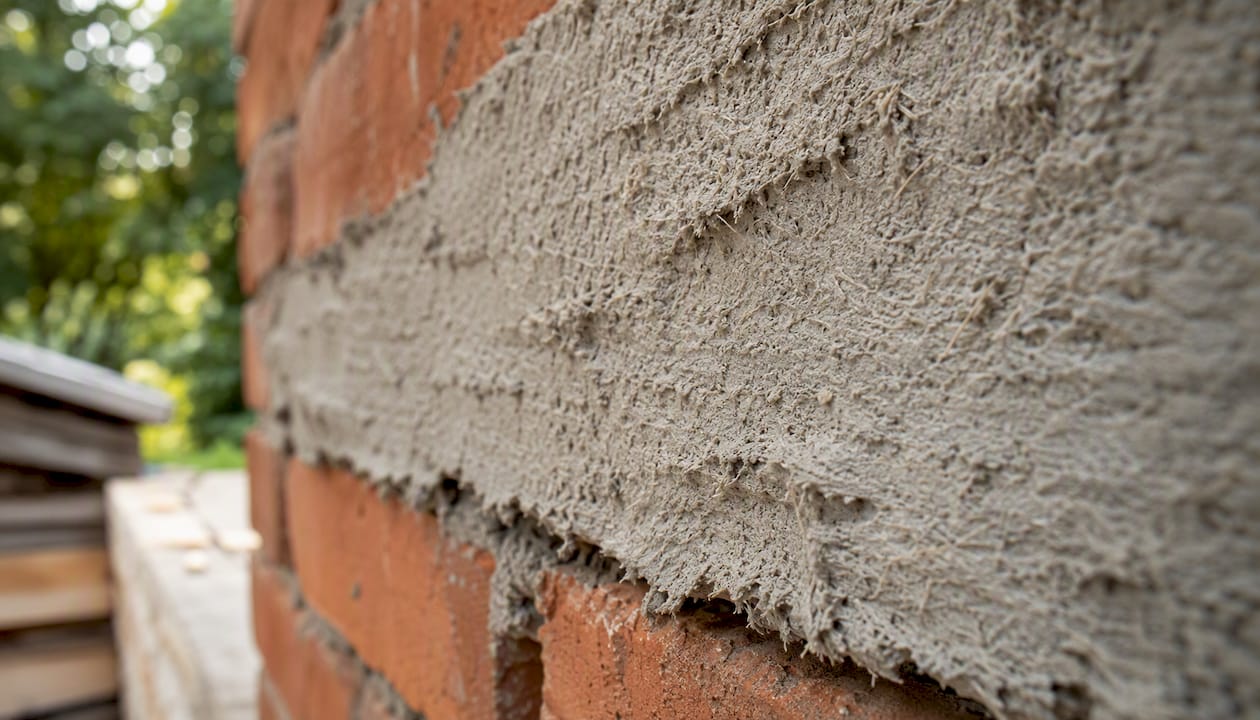
Chamber Safe (manufactured by U.S. Fireplace Products) is one of the most widely specified products for this application. It is a cementitious refractory compound listed by Underwriters Laboratories for resurfacing smoke chambers. According to the Chamber Safe installation instructions, each 30 lb container covers approximately 6 square feet at 1 inch thickness. The manufacturer specifies minimum thickness requirements, mixing ratios, and a required initial 24-hour cure period followed by heat-conditioning before normal fireplace use. The instructions also recommend that a qualified professional perform installation in many situations, particularly where access is limited or structural repair is involved.
Pro Tip: Never substitute standard masonry mortar or hydraulic cement for a listed refractory parging compound. The temperature differential between a cold chimney and an active fire can exceed 1,000°F, and only purpose-formulated refractory products are engineered to handle that range without failure.
For hard-to-reach chambers, spray-on ceramic coating systems offer an alternative application method. These products provide high-temperature resistance and can be applied faster in tight spaces where a trowel has limited reach.
When parging also involves sealing around a liner termination or metal bottom plate, use a refractory cement specified for that interface. Compatibility between the parging compound and any metal components matters — follow manufacturer guidance for setting time and bonding requirements.
Common tools and PPE for the job:
- Margin trowel and pointing trowel for hand application
- Grout bag for filling deep voids and tight corners
- Drill with mixing paddle for consistent compound preparation
- N95 or P100 respirator (refractory dust is a respiratory hazard)
- Safety glasses and work gloves
- Drop cloths to protect the firebox and hearth
What codes and safety standards apply to smoke chamber parging?
NFPA 211, the Standard for Chimneys, Fireplaces, Vents, and Solid Fuel-Burning Appliances, is the primary model standard governing smoke chamber construction and repair in the United States. It requires that smoke chamber walls be smooth and that the chamber meet specific geometry requirements. Local jurisdictions adopt NFPA 211 at varying rates, but it is the benchmark most inspectors and contractors reference.
"NFPA 211 requires that smoke chamber walls be constructed of solid masonry units, or be parged smooth with refractory mortar. Corbeled construction that leaves a stepped surface exposed does not meet this requirement without parging."
— National Chimney Authority, summarizing NFPA 211 smoke chamber requirements
A UL listing on a parging product like Chamber Safe means the product has been independently tested and certified to perform as claimed under the conditions specified. When a manufacturer's installation instructions call for a minimum thickness or a specific mixing ratio, those requirements are part of what the UL listing covers. Deviating from them voids the listing and can void any warranty on the repair.
Level II inspections are triggered by property sales, chimney fires, and significant system changes. Level III inspections, which may involve opening walls or removing components, are required when a Level II reveals hidden damage. If you are doing substantial smoke chamber reconstruction rather than surface parging, check with your local building department about whether a permit is required. Structural chimney work sometimes falls under permit requirements depending on your jurisdiction.
When hiring, ask for proof of CSIA (Chimney Safety Institute of America) certification or NFIC (National Fireplace Institute Certified) credentials. These designations confirm that a technician has passed standardized testing on chimney systems, safety codes, and proper repair methods.
Should you DIY or hire a professional for smoke chamber parging?
Minor cosmetic smoothing on a structurally sound chamber with no corbeling beyond a shallow step or two is within reach for a careful, experienced DIYer who is comfortable working in confined spaces and willing to follow manufacturer instructions precisely. That is a narrow category.
Most smoke chamber parging jobs belong in a professional's hands. Refractory repair work requires the right materials and technique to meet safety expectations, and errors in a smoke chamber can have serious consequences, including chimney fires and carbon monoxide intrusion.
Hire a professional when you see any of these:
- Corbeling that requires significant material buildup (more than a thin smoothing coat)
- Wall thickness below code minimums
- Structural cracks, spalled brick, or sections of missing masonry
- Evidence of a previous chimney fire (glazed creosote, warped damper, heat-damaged brick)
- Water damage or freeze-thaw deterioration
- The manufacturer's installation instructions specify professional installation for your situation
Questions to ask when getting bids:
- Are you CSIA-certified or NFIC-certified? Can I see your credentials?
- Which parging product will you use, and is it UL-listed for smoke chambers?
- Will the repair meet NFPA 211 requirements? Can you document that?
- What is your warranty on the parging work?
- Are you licensed and insured in Virginia (or your state)?
- Will you provide a written scope of work that itemizes materials, labor, and inspection?
A contractor who cannot answer these questions clearly is a red flag. Legitimate chimney professionals reference standards, carry credentials, and put their warranty in writing.
How do you maintain a parged smoke chamber?
Annual inspection and sweeping is the baseline recommendation from the Chimney Safety Institute of America for any wood-burning fireplace. For a recently parged chamber, the first-year inspection is especially important: it lets a technician confirm that heat-conditioning went as expected and that no delamination or cracking developed during the initial season.
Maintenance checklist for a parged smoke chamber:
- Schedule a professional sweep and inspection every year, or after burning more than one cord of wood
- Tell your sweep that the chamber has been parged and when the work was done; they will pay particular attention to the parging surface during the inspection
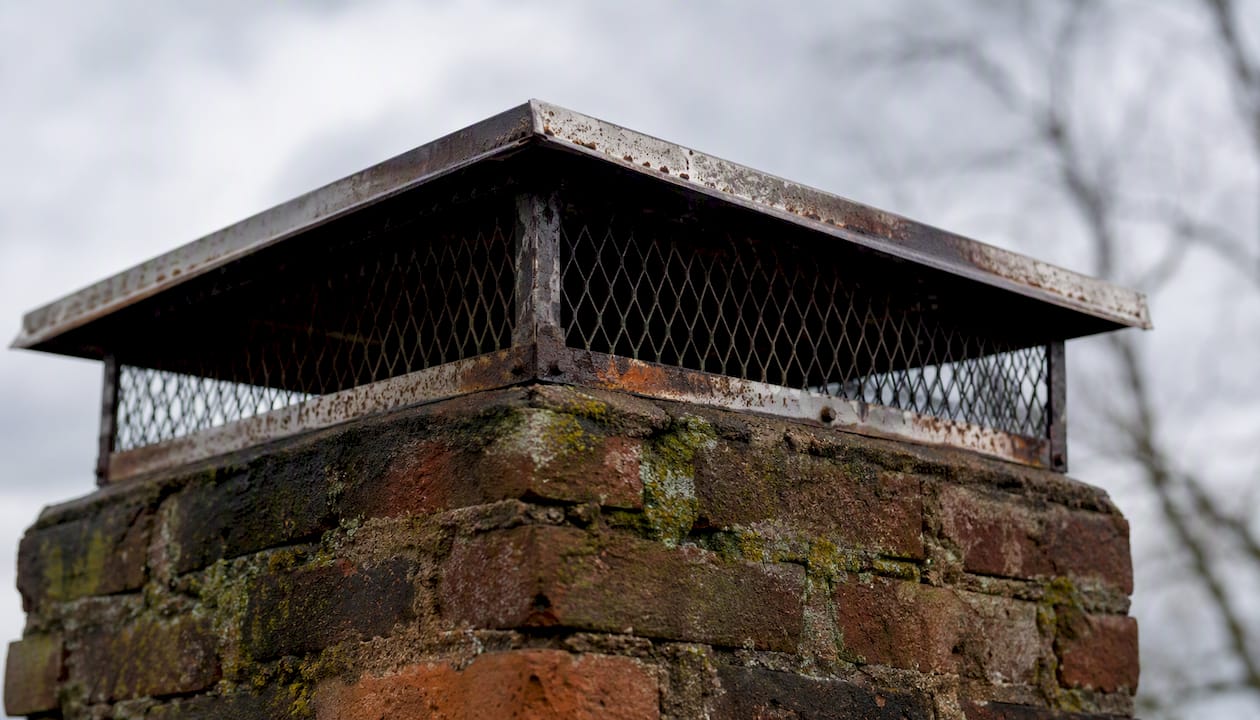
- Check the chimney cap condition annually; a missing or damaged cap allows water into the smoke chamber, which is the leading cause of parging deterioration
- Inspect flashing at the roofline each spring; failed flashing lets water run down the outside of the flue and into the chamber
- After any chimney fire, however minor, schedule an NFPA Level II inspection before relighting
- Keep a record of the parging product used, the contractor's name, and the date of work; this information is useful for warranty claims and future inspections
Homeowner-visible inspection signs to watch for between professional visits include smoke spillage during normal fires, a new musty or acidic smell from the firebox, and visible white efflorescence (mineral deposits) on the firebox walls, which signals water is moving through the masonry.
A chimney cap is the single most cost-effective protective measure for a parged chamber. It keeps rain, snow, and debris out of the flue and dramatically reduces moisture cycling in the smoke chamber. If your cap is cracked, rusted, or missing, replace it before the next heating season.
Why most homeowners underestimate what a smoke chamber repair actually involves
The conventional wisdom is that smoke chamber parging is a straightforward DIY project: buy a bucket of refractory compound, mix it up, and trowel it on. That framing understates the job significantly.
The smoke chamber is one of the most thermally stressed components in a residential masonry system. It cycles from ambient temperature to several hundred degrees and back, repeatedly, across a heating season. The parging layer has to bond to a substrate that may have years of creosote contamination, moisture damage, or unstable mortar, and it has to do so while meeting a minimum thickness that most first-time applicators underestimate. Getting the mix ratio wrong by even a small margin changes the final strength of the material.
What actually determines whether a parging job lasts five years or twenty is not the product, it is the preparation. A contractor who spends two hours cleaning and assessing the chamber before mixing anything is doing the job correctly. One who shows up with a bucket and a trowel and starts applying immediately is not.
The other thing homeowners consistently underestimate is the inspection step. Parging over a smoke chamber that has a structural crack or a section of deteriorated brick does not fix the underlying problem. It conceals it. A CSIA-certified sweep or an experienced masonry contractor will identify those conditions before any material goes on the wall. That inspection is not an upsell. It is the difference between a repair that holds and one that fails in the first heating season.
Heritagemasonryandbrick: chimney repairs and parging in Richmond, VA
When a smoke chamber needs more than a surface coat, the repair scope quickly expands to include repointing, structural assessment, and sometimes liner work. That is where having a single contractor with deep masonry experience matters.
Heritagemasonryandbrick has provided chimney repairs and full masonry restoration in Richmond, VA for over 25 years. The team handles smoke chamber inspection, refractory parging, repointing and tuckpointing, and structural brick repair under one roof, with every job backed by a 5-year workmanship guarantee. Before calling for a quote, it helps to have a few things ready: photos of the firebox and any visible damage, the date of your last professional inspection, and a note of any symptoms (smoke spillage, odors, visible cracks). Call 804-324-6304 or visit heritagemasonryandbrick.com to request your free estimate.
Useful sources and standards to check
These are the most relevant references for verifying manufacturer requirements, code standards, and contractor credentials:
- Chamber Safe install instructions (product PDF)
- What Is Smoke Chamber Parging? Why Is It Important? - The Chimney Doctor, Ltd.
- Chimney Smoke Chamber Repair Services | Precision Chimney Care
- What is Smoke Chamber Parging? | Prevent Downdrafts & More
- Smoke Chamber Construction: Design, Parging, and Code Requirements | National Chimney Authority
- What Is Chimney Smoke Chamber Parging? - Hoosier Masonry Solutions
- What Is Parging a Chimney? | Angi
- Parging the Mesh Bottom Plate for a Fireplace - Rockford Chimney Supply
- Chimney 101: Smoke Chamber