
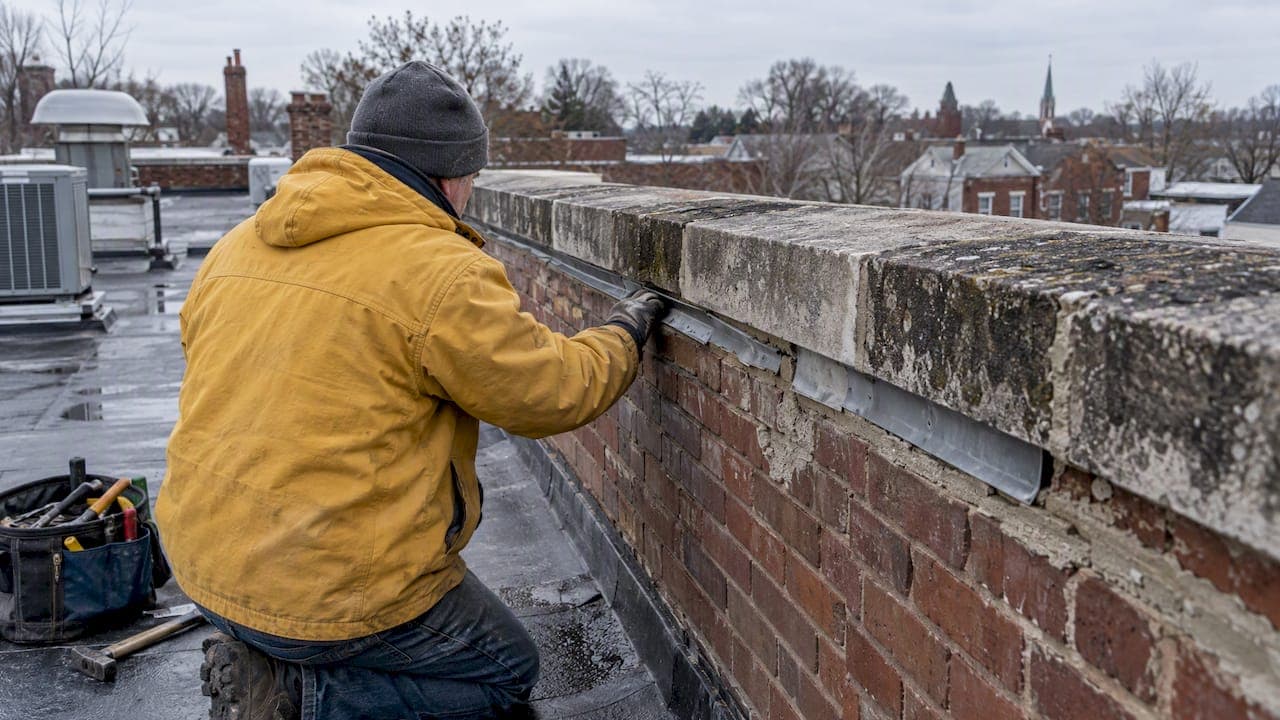
If you see loose mortar or a few spalled bricks with no movement, repointing and localized patching will usually solve the problem. If the parapet is leaning, shows a wide crack, or has units separating from the wall, plan for a partial or full rebuild and call a structural engineer before anyone climbs near it. Active leaks or falling debris mean you cordon off the area below and cover the top with a tarp right away.
TL;DR:
- Address small issues like spalling and mortar loss promptly to prevent water intrusion and structural deterioration.
- A complete rebuild is necessary only for leaning or bulging parapets, while minor cracks can usually be fixed with repointing or crack injection.
- Proper flashing, a sloped coping, and drainage systems are critical to prevent water from entering and damaging the parapet wall.
- Cost and repair method vary significantly based on damage severity, with professional inspection and proper drainage measures being essential for longevity.
- Avoid superficial fixes by focusing on water control and drainage, as neglecting these causes leads to recurring problems and costly repairs.
Table of Contents
- How to spot parapet damage before it gets worse
- Why parapets fail: water, flashing, and movement
- Repair options and when each one makes sense
- Hiring the right professional and budgeting the project
- What a solid parapet repair checklist looks like
- Why most parapet advice stops short of the real fix
- How Heritage Masonry & Brick can help with your parapet
- FAQ
- Sources
How to spot parapet damage before it gets worse
A parapet wall tells you it's failing well before it becomes dangerous, if you know what to look for. Hairline cracks that follow the mortar joints are usually normal weathering, but diagonal or stepped cracks through the brick itself often point to movement in the foundation or wall ties below.
- Spalling: brick faces flaking or popping off, usually from trapped moisture that froze and expanded.
- Mortar loss: joints eroded back more than a quarter inch, leaving the wall open to wind-driven rain.
- Bulging or leaning: any visible lean or outward bow signals the wall may be losing its grip on the structure behind it.
- Rust stains or streaking: a sign that embedded steel anchors or lintels are corroding and expanding inside the masonry.
- Vegetation or dark staining: roots and persistent moisture working their way into open joints.
Bulging, leaning, or units that look ready to fall mean you treat the area as an emergency: rope it off and get a professional out quickly for soffit, fascia & gutter repair in Dodge County, WI. For everything else, record crack widths, note whether displacement has changed over the past few months, and check whether water stains line up with a recent storm or a long-standing leak.
Why parapets fail: water, flashing, and movement
Most parapet failures trace back to water that got in and had nowhere to go. A parapet sits above the roofline on three exposed sides, so it takes more rain, freeze-thaw cycling, and thermal swing than any other part of the wall. When coping stones crack or lose their slope, water sits on top of the wall and works its way down through the mortar joints instead of running off.
Parapet walls are a common point of rain entry when they aren't isolated from the wall below by proper flashing, and flashing installed at the base of the parapet is what keeps that moisture from migrating into the building.
- Failed or missing through-wall flashing lets water bypass the wall entirely and soak the structure below.
- A damp-proof course, cavity trays, and weep holes are what let incidental moisture drain back out once it's inside the cavity.
- Thermal movement and corroded steel anchors push joints apart from the inside, often years before any crack shows on the surface.
- Sealing a damaged parapet with an impermeable coating, without fixing the flashing first, traps moisture and speeds up spalling rather than stopping it.
Flashing has to do two jobs at once: keep bulk water out of the wall assembly and still give any water that does get in a path to exit. A repair that only patches the surface without correcting this skips the actual cause of the damage.
Repair options and when each one makes sense
The right repair depends on how far the damage has progressed, not just how bad it looks from the sidewalk. A hairline crack and a leaning wall are not the same job, and treating them the same way wastes money either by over-building a minor fix or under-building a serious one.
- Minor damage: crack injection, tuckpointing, and patch mortar handle isolated spalling or joint erosion where the wall is still plumb and sound. This holds up well for years when the mortar mix matches the original in strength and porosity.
- Moderate damage: replacing cracked coping, installing new through-wall flashing, rebuilding a damaged wythe, and adding weep holes address water intrusion that's already reached the cavity but hasn't compromised the wall's stability.
- Major damage: a full parapet rebuild, replacement of corroded anchors, and structural stabilization are needed once the wall is leaning, bowed, or held together by little more than old mortar.
Every one of these repairs should include the same water-control basics: sloped coping that sheds rain instead of holding it, a drip edge that projects clear of the wall face, through-wall flashing tied into the roof membrane, and clear weep paths so trapped moisture can escape. Skip any of these and even a brand-new rebuild will start failing again within a few winters.
Material compatibility matters as much as the repair method. A mortar mix suited to extreme exposure and matched to the original masonry keeps the new work from cracking the old brick around it, since mortar that's harder or less porous than the surrounding brick forces moisture and movement into the brick itself instead of the joint.
Pro Tip: Sequence the work so flashing goes in before coping; installing coping first often means tearing it back out to tie the flashing in correctly.
Hiring the right professional and budgeting the project
Minor repointing is squarely in a licensed masonry contractor's wheelhouse. Anything involving a lean, a structural crack, corroded anchors, or a wall that's a hazard to the sidewalk below calls for a structural engineer first. Some jurisdictions go further: NYC's Local Law 126 now requires regular parapet observations by a licensed architect or engineer, with a report and a timeline for fixing anything unsafe. Check whether your own city has a similar ordinance before you assume a contractor's word is enough.
A proper inspection should leave you with more than a verbal opinion. Insist on:
- Photos of every area of concern, not just the worst spot.
- Measured crack widths, not vague descriptions like "a bit wide."
- A written assessment of anchor and flashing condition.
- An itemized estimate with the recommended scope and any lower-cost alternatives explained.
A typical project runs from scaffolding and temporary protection through demolition, rebuild or repair, flashing and coping installation, and cleanup, with a follow-up visit afterward. Costs vary based on access (scaffolding costs can be significant on taller buildings), pricing method, chosen mortar and coping materials, and the extent of drainage upgrades. Be cautious if a proposal omits flashing or coping work and only includes "repointing," as it may not address the underlying cause.
What a solid parapet repair checklist looks like
After 25 years of masonry work, the parapets that hold up longest are the ones repaired as a system, not patched piece by piece. When you're comparing proposals, look for an inspection that covers both the wall and the roof tie-in, a flashing plan, a coping detail with real slope and drip edge, mortar matched to your existing brick, and a workmanship guarantee behind the finished work.

A few field habits make the difference. Flashing goes in before coping, never after. Surface sealers applied without fixing flashing or drainage first tend to trap moisture rather than keep it out. We provide free estimates and back our work with a workmanship guarantee, emphasizing repairs that hold up for years.
Why most parapet advice stops short of the real fix
Most guidance on parapet repair treats it as a cosmetic problem: patch the crack, repoint the joint, repaint if needed. That advice isn't wrong so much as incomplete. A wall can look repaired and still fail within a couple of winters if the coping doesn't shed water and the flashing doesn't give trapped moisture a way out.

The conventional wisdom underrates how much of parapet failure is really a drainage problem wearing a cosmetic disguise. Cracked mortar and spalled brick are the symptoms; water with nowhere to go is usually the disease. Property owners who chase the visible crack without asking where the water came from end up paying for the same repair twice.
If you take one thing from this, make it this: ask any contractor how water will get out of that wall once it's rebuilt, not just how it will be kept from getting in. The answer tells you more about the quality of the repair than the brick they plan to use.
— Thomas
How Heritage Masonry & Brick can help with your parapet
We handle parapet repair the way we'd want it done on our own building: inspection first, then a scope that covers repointing, structural repairs, coping and flashing replacement, and full rebuilds when that's what the wall actually needs.

Our estimate includes site photos, a clear scope of work, and the water-control details your parapet needs to actually stay dry, backed by a workmanship guarantee. If you're seeing cracks, spalling, or a lean on your building, request a free estimate on our brick repair page and we'll walk the site with you.
FAQ
What are common problems with parapet walls?
The most common issues are cracked or spalled brick, mortar joints eroded by weather, and coping that no longer sheds water. Leaning or bulging is less common but far more serious, since it usually points to anchor corrosion or structural movement behind the visible surface.
What is the material at the top of a parapet wall?
The cap on top of a parapet is called coping, typically stone, cast concrete, or metal, shaped with a slope and a drip edge so rain runs off instead of pooling. Coping that's cracked or flat instead of sloped is a frequent starting point for water damage lower in the wall.
How do you fix cracks in a parapet wall?
Hairline cracks in mortar joints are usually fixed with repointing or crack injection once the underlying cause, often thermal movement or minor settling, is confirmed as stable. Wider or diagonal cracks through the brick itself need a structural assessment before any cosmetic repair, since they can signal anchor failure or foundation movement.
Why do parapet walls leak?
Parapets leak when coping or through-wall flashing fails and water that lands on the exposed top and sides of the wall finds a path down through the joints. Flashing is designed to block that water and still let trapped moisture drain back out, so a leak often means both the barrier and the drainage path have broken down.
Is parapet wall repair expensive?
Cost depends mainly on access, such as scaffolding height, the extent of rebuild needed, and whether new flashing and coping are added. Minor repointing costs far less than a partial or full rebuild, and a written, itemized estimate from a licensed contractor is the only reliable way to know which category your repair falls into.
Sources
- Rehabilitation Guidelines 1986: Rehabilitation of Walls, Windows, and Roofs
- CBD-6. Rain Penetration of Walls of Unit Masonry
- Parapets part 2: navigating codes — GAF Blog
- What boards need to know about NYC’s parapet wall inspection requirements — BrickUnderground