
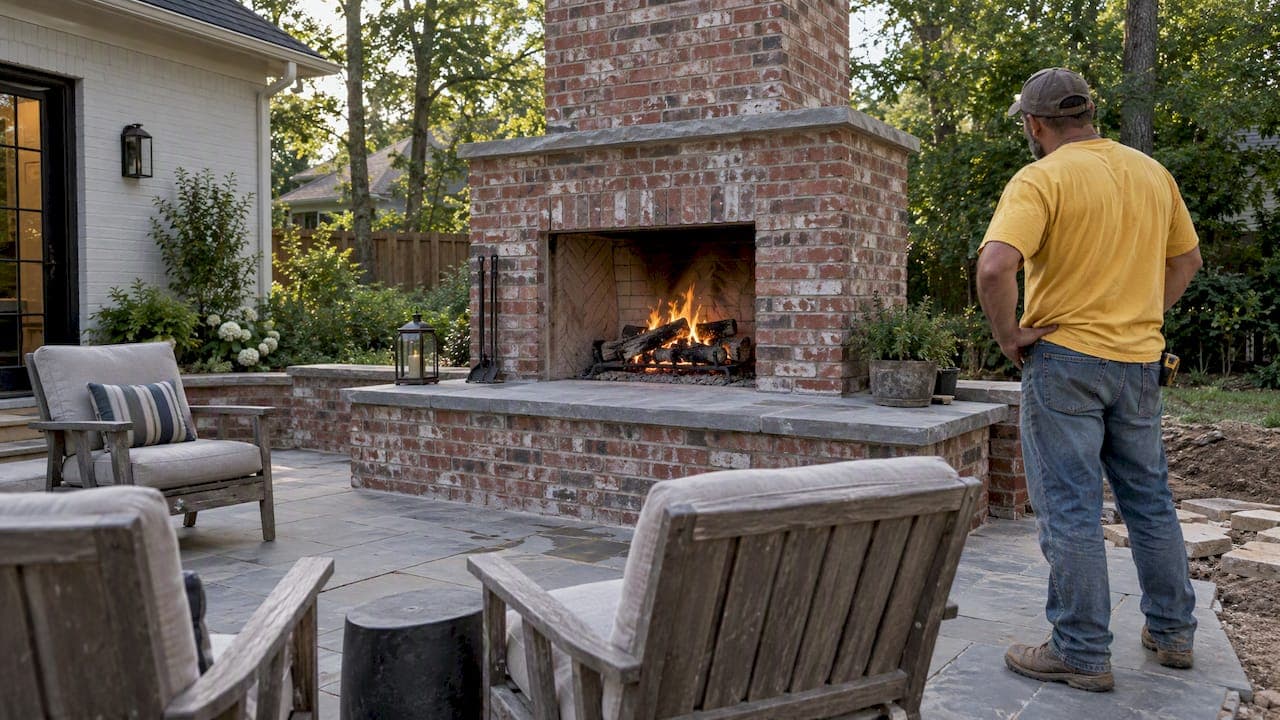
An outdoor brick fireplace is a durable, long-lasting focal point when the design respects site conditions, local code clearances, and a realistic budget. Before calling a contractor, measure the space for required clearances, check how close seating will sit to the firebox, and settle on a rough budget range. These three checks determine whether your project moves forward smoothly or stalls at the permit desk.
TL;DR:
- Local codes require minimum clearances for combustible materials and proper hearth dimensions to ensure safety and permit approval.
- Firebox brick must meet ASTM C1261 standards, with refractory mortar used for proper expansion and contraction, unlike standard face brick.
- Budget ranges from $3,500 to $11,000, influenced by size, finish quality, chimney height, and added features like gas lines or custom mantels.
- Proper chimney placement, height, and wind considerations are critical to prevent draft problems and smoke settling in seating areas.
- Routine annual maintenance includes inspecting mortar joints, sealing, and clearing debris to prevent damage from water intrusion and freeze-thaw cycles.
Table of Contents
- Codes and safety: required clearances, hearth dimensions, and where to check
- Materials that matter: firebox brick, refractory mortar, and exterior facing options
- Costs and budgeting: typical price ranges and what drives quotes
- Build choices: wood-burning vs. gas insert, DIY vs. hiring a mason
- Chimney drafting and smoke control: placement, height, and wind considerations
- Maintenance and common problems (what to expect over the life cycle)
- Seasonal use and weather protection tips
- Integration with outdoor living spaces (seating, cooking areas)
- Environmental and local regulations regarding open fires outdoors
- Author perspective: why hire an experienced masonry contractor for brick fireplaces
- How Heritage Masonry & Brick can help
- FAQ
- Sources
Codes and safety: required clearances, hearth dimensions, and where to check
Every outdoor brick fireplace has to meet minimum clearances before a local building department will approve it. The International Residential Code sets baseline distances between the firebox and any combustible material nearby.
Combustible materials generally need minimum clearances of a few inches at the front and sides of the firebox and a slightly larger distance at the back, according to IRC Chapter 10. For fireplace openings smaller than 6 square feet, the hearth extension must run a moderate distance in front of the opening and to each side. These numbers protect decking, railings, and seating from radiant heat and stray embers.

Local building departments often add their own requirements on top of the IRC baseline, so confirm specifics with the authority having jurisdiction before finalizing a design. Expect a permit application, at least one inspection during construction, and possibly a final inspection before use.
Before contacting a contractor, walk your site with a tape measure and check:
- Distance from the planned firebox opening to the nearest railing, fence, or wall.
- Width available for a hearth extension that meets the 16 inch and 8 inch minimums.
- Overhead clearance if a pergola, roof overhang, or tree canopy sits nearby.
- Property line setbacks required by your local zoning rules.
Materials that matter: firebox brick, refractory mortar, and exterior facing options
The brick lining the inside of the firebox is not the same product as the brick on the outside face. Firebox brick has to meet ASTM C1261, a specification built around the extreme heat a residential firebox generates. Standard face brick was never engineered for that kind of thermal cycling and tends to crack or crumble when used inside a firebox.
Firebox brick is typically laid with refractory mortar in joints roughly 1/8 inch thick, far tighter than the joints used on exterior brickwork, which helps the lining expand and contract without failing. For the visible, weather-facing brick, homeowners generally choose from:
- Grade SW face brick (ASTM C216), rated for severe weathering, which holds up best in freeze-thaw climates.
- Standard clay brick (ASTM C62), a lower-cost option suited to milder climates with less moisture cycling.
- Reclaimed or antique brick, prized for appearance but often inconsistent in strength and absorption.
When sourcing materials, ask suppliers directly whether firebox brick is certified to ASTM C1261 and whether the mortar is rated refractory, not standard Type N or S mortar.
Pro Tip: Ask your mason to show the spec sheet or stamp on firebox brick before it goes into the wall, not after.

Costs and budgeting: typical price ranges and what drives quotes
A complete outdoor brick fireplace typically runs from $3,500 on the low end to $11,000 on the high end, averaging around $6,500, according to a cost guide covering installed projects. Where your project lands depends heavily on size, finish quality, and how far the chimney has to rise.

Most installations use a crew of a few masons working a moderate number of hours on site, and regional labor rates alone can shift a total by a substantial percentage, per the same cost guide. Adding a gas line, electric igniter, or custom mantel pushes costs toward the high end quickly.
To avoid surprises when comparing bids:
- Ask each contractor to itemize foundation, brickwork, firebox, chimney, and permit fees separately.
- Request the brick and mortar brand names in writing, not just "brick" as a line item.
- Ask whether scheduling in off-peak months affects price or lead time.
Readers planning a combined patio and fireplace project can review a related brick patio cost breakdown for comparable per-square-foot figures.
Build choices: wood-burning vs. gas insert, DIY vs. hiring a mason
Deciding how the fireplace burns and who builds it shapes both the budget and the long-term experience.
- Wood-burning masonry fireplace: offers the strongest ambiance and classic look but requires more maintenance and produces smoke that needs proper drafting.
- Gas insert or burner: lights instantly, burns cleaner, and simplifies permitting in some jurisdictions, though it depends on a buried gas line.
- Decorative burner-only setups: lowest maintenance but limited heat output and no true wood-fire character.
Small cosmetic tasks, like repainting a mantel or adding a veneer accent, are reasonable DIY projects. Footings, chimney drafting, and any work tied to code compliance call for a licensed mason who understands structural loads and permit requirements.
When interviewing contractors, ask about licensing, past outdoor fireplace projects, and whether they offer a written workmanship guarantee, a detail that protects you long after the crew leaves.
Chimney drafting and smoke control: placement, height, and wind considerations
Draft problems are one of the most common complaints with outdoor fireplaces, and they are expensive to fix once the chimney is built. According to guidance on fireplace smoke, insufficient chimney height and sheltered locations are frequent causes of smoke settling into seating areas rather than rising away from it.
Before building, check:
- Prevailing wind direction relative to where seating will sit.
- Whether a pergola, covered patio, or nearby wall will trap smoke instead of letting it vent.
- Chimney height relative to nearby rooflines, fences, or trees.
Pro Tip: Walk the site on a breezy evening and note which direction smoke from a test fire or smoke stick drifts before pouring any footings.
A taller chimney, a properly sized damper, or a chimney cap can all help control draft, but redesigning a chimney after the brick is set almost always means partial demolition.
Maintenance and common problems (what to expect over the life cycle)
Outdoor brick takes more weather abuse than interior brick, and a few failure modes show up repeatedly. Spalling, where the brick face flakes or pops off, usually traces back to water intrusion and freeze-thaw cycling. Mortar joint loss and efflorescence, the white powdery deposits on brick, are both early warning signs that moisture is getting where it shouldn't.
A simple maintenance rhythm catches problems early:
- Inspect mortar joints and brick faces once a year, ideally before winter.
- Watch for crumbling mortar and plan repointing before gaps widen into structural gaps.
- Check the chimney cap annually for cracks or displacement.
- Reseal brick on a schedule recommended for your climate rather than waiting for visible damage.
Small mortar repairs are sometimes manageable for a confident homeowner, but structural repointing or brick replacement is worth handing to a mason who can match existing material. For a deeper look at prevention, see this guide on freeze-thaw brick damage and this resource on when to repoint brick.
Seasonal use and weather protection tips
An outdoor brick fireplace sees very different conditions depending on the season, and planning for that range extends its life. In summer, heavy rain and humidity push moisture into mortar joints, so good drainage around the base matters as much as the brickwork itself. In winter, freeze-thaw cycling is the real threat: water that seeps into brick or mortar during a thaw can expand when it refreezes, which is how spalling starts.
A few habits make a real difference across seasons:
- Keep the firebox and chimney cap clear of leaves and debris before fall storms arrive.
- Avoid using the fireplace during active rain or snow, since trapped moisture inside a hot firebox stresses the brick.
- Cover the hearth or firebox opening with a weather-rated cover during long stretches of disuse.
- Check for standing water near the foundation after heavy storms, since pooling accelerates freeze-thaw damage.
Masonry sealed correctly at installation sheds water better through these cycles, which is part of why the brick and mortar specification matters as much as the design itself. A fireplace built with the right materials and proper drainage can handle decades of seasonal swings with only routine upkeep.
Integration with outdoor living spaces (seating, cooking areas)
A brick fireplace works best as part of a larger outdoor living layout rather than as an isolated feature. Seating typically works best arranged in a loose semicircle 7 to 10 feet from the firebox opening, close enough to feel the heat without sitting inside the smoke path discussed earlier in chimney planning.
Many homeowners pair a fireplace with a cooking feature, either a built-in grill, a pizza oven, or a simple cooking grate set into the firebox itself. If cooking is part of the plan, the firebox lining and hearth size need to account for that use from the start, since a cooking fireplace often runs hotter and more often than a purely decorative one.
Tying the fireplace into a patio or walkway during the same project phase also saves money on site preparation, since foundation and grading work can be shared across both features. Readers planning that kind of combined project may find it useful to review patio and walkway options alongside the fireplace design.
Environmental and local regulations regarding open fires outdoors
Beyond building code clearances, many municipalities regulate when and how an outdoor fire can burn at all. Some areas restrict open burning during dry seasons or issue burn bans tied to air quality alerts, and a few jurisdictions require a permanent, code-built fireplace rather than a portable fire pit for any regular use. Homeowners' association rules can add another layer of restriction on top of municipal code, sometimes limiting fireplace height, smoke output, or hours of use.
Before committing to a wood-burning design, check with your local fire marshal or building department about seasonal burn restrictions and whether a gas-fueled alternative avoids those limits entirely. Chimney height and placement can also intersect with roofing detail requirements where a chimney meets an existing roofline, an area covered in this explanation of chimney cricket requirements. Confirming these rules before construction avoids a fireplace that looks finished but cannot legally be lit.
Author perspective: why hire an experienced masonry contractor for brick fireplaces
Matching existing brick, setting the right mortar, and getting chimney draft right are craft skills built over years, not something a weekend project reliably gets right. With extensive experience in masonry, a reputable contractor backs every project with a free estimate and a workmanship guarantee. If you're planning a fireplace, start with a site visit and a material-match plan before any brick goes down.
— Thomas
How Heritage Masonry & Brick can help
A well-built outdoor brick fireplace is only as good as the crew that sets the firebox, mortar, and chimney. Heritage Masonry & Brick brings that expertise to Richmond homeowners through:

- New Brickwork for a custom-designed fireplace built to code from the footing up.
- Chimney Repair for correcting draft or structural issues on an existing fireplace.
- Brick Repointing & Tuckpointing to extend the life of brick already showing wear.
- Brick Patios & Walkways for homeowners combining a fireplace with a full outdoor living space.
Every project includes a free estimate and a workmanship guarantee. Request your custom brickwork estimate to get started.
FAQ
How much does a brick outdoor fireplace cost?
A typical installed outdoor brick fireplace ranges from $3,500 to $11,000, averaging about $6,500, according to a cost guide covering U.S. installations. Size, chimney height, and finish materials drive most of the difference between the low and high end.
What are the drawbacks of an outdoor fireplace with a chimney?
A chimney adds smoke control and height requirements that increase both cost and the risk of draft problems if the design is wrong. According to fireplace smoke guidance, insufficient chimney height or a sheltered location often causes smoke to settle into seating areas rather than vent properly.
What bricks to use for an outdoor fireplace?
The firebox interior needs brick certified to ASTM C1261, which is built to withstand firebox heat, while the exterior face typically uses Grade SW brick rated for weather exposure. Standard face brick is not suitable inside the firebox because it was not designed for that level of thermal stress.
What are the common problems with fireplace bricks?
The most common issues are spalling, where the brick face flakes off, and mortar joint deterioration, both usually tied to water intrusion and freeze-thaw cycling. Efflorescence, a white powdery residue, is often an early sign that moisture is getting into the brick before visible damage appears.
Sources
- International Residential Code (IRC) — Chapter 10: Chimneys and Fireplaces
- ASTM C1261 — Firebox brick specification (summary)
- Outdoor brick fireplace cost guide (Current Cost)