
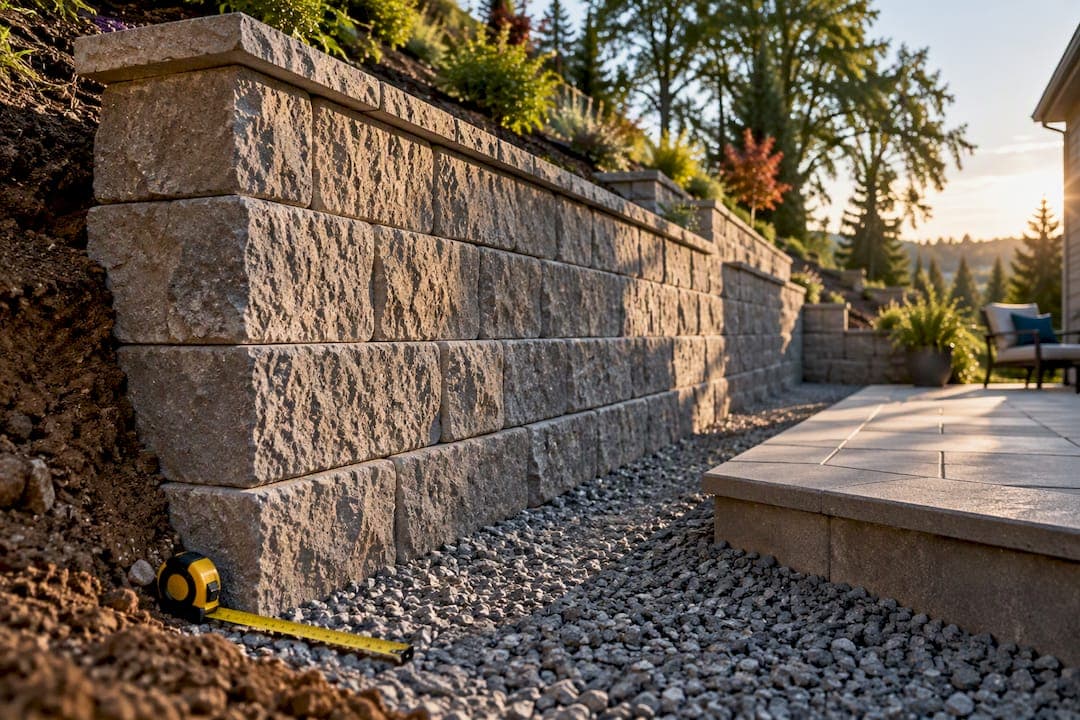
Most Richmond homeowners pay a typical range per square foot for a new retaining wall, depending on material, with landscape block usually less expensive and engineered poured concrete or brick masonry generally more costly. Drainage and the amount of retained height behind the wall drive the biggest swings in price, more than any other factor. Before you compare quotes, get a site assessment and a written estimate that spells out drainage, base prep, and access. That's the fastest way to know what your yard will actually cost.
TL;DR:
- Drainage installation generally adds hundreds of dollars but is crucial to prevent early wall failure caused by trapped water behind the structure.
- Walls holding back more than 3 feet of unbalanced fill in Henrico County require permits, and over 6 feet in Richmond need additional engineering and design considerations.
- Most retaining walls in Richmond cost between $18 and $60 per square foot, with material choice and retained height influencing final pricing more than wall length.
- Contractors prioritize site conditions such as accessible height, load behind the wall, roots, and drainage before providing exact quotes to avoid scope changes.
- A written estimate should clearly specify drainage details, base preparation, wall dimensions, and access conditions to prevent surprises during construction.
Table of Contents
- What Drives Retaining Wall Cost in Richmond?
- What Contractors Actually Look for On Site
- Get a Free Richmond Retaining Wall Estimate
- Sources
- FAQ
What Drives Retaining Wall Cost in Richmond?
Material choice sets the starting price, but site conditions decide what you actually pay. Here's how the common wall types typically break down per square foot of exposed wall face in the Richmond market:
- Landscape block (segmental retaining wall units): roughly $18 to $35 per square foot for straightforward, low-height installs.
- Interlocking block with geogrid reinforcement: roughly $28 to $48 per square foot once soil reinforcement is added for taller or heavily loaded walls.
- Poured concrete: roughly $35 to $55 per square foot, reflecting formwork, rebar, and cure time.
- Brick or masonry-faced walls: roughly $40 to $60 per square foot, since matching existing brick and finishing joints takes more labor than block work.
Those ranges assume a wall in decent, accessible ground. Several things push a quote toward the top of a range, or past it entirely.
Retained height matters more than wall length. A 3-foot wall holding back a gentle slope is a different job than a 3-foot wall holding back 6 feet of unbalanced fill behind it. Henrico County requires a permit once a wall supports 3 feet of unbalanced fill, and once that threshold is crossed, engineering and inspection costs enter the picture. Richmond's own building guidance caps concrete and masonry walls at 6 feet before additional design detail is required.
Drainage is where budgets quietly balloon. A wall without proper drainage traps water behind it, and trapped water is the single biggest cause of wall failure. Correct detailing calls for perforated drain pipe, clean gravel backfill, and filter fabric, per regional retaining wall standards. Skipping these adds a few hundred dollars in savings now and a full rebuild in five years.

Surcharge loads (a driveway, patio, or fence sitting near the top of the wall) and tight-access lots (narrow side yards, mature trees, fences that block equipment) both tend to raise labor and haul-out costs, since crews often have to work by hand instead of machine. A contractor should note these conditions in writing, not fold them into a vague "site conditions" line.
What Contractors Actually Look for On Site
Before a Richmond contractor ever writes a number, they're checking retained height (not just visible face height), what's behind the wall, and what could complicate access. Photograph the full run of the wall from both ends, plus close-ups of any cracking, bulging, or standing water. Measure length and height yourself as a starting point, and note anything nearby that adds load: patios, driveways, AC pads.

Roots, buried drain lines, and old fill dirt show up more often than homeowners expect and can shift scope mid-project. Flag anything you know about upfront. Spring and fall stay busiest for Richmond retaining wall repair work, so book assessments early and expect a few weeks between consultation and start date.
Get a Free Richmond Retaining Wall Estimate
Comparing bids off a phone call is how homeowners end up with a wall that looks fine for two years and fails in the third. Heritage Masonry and Brick offers a free, on-site estimate for retaining wall and masonry work across Richmond, and every estimate comes as a written scope, not a verbal ballpark.

That written scope covers drainage detail, base preparation, and any access assumptions built into the number, so there's no ambiguity later about what was priced. Every completed project carries a 5-year workmanship guarantee, and Heritage's approach to brick repair and matching work carries the same standard: existing material matched carefully, backed by traditional masonry technique paired with modern execution.
To make your visit faster and your estimate sharper, have a few things ready before the crew arrives: photos of the full wall run, an approximate height and length, and any history of shifting, cracking, or drainage trouble you've noticed. If your project involves structural cracking rather than a new build, the structural repair page covers what that assessment looks like separately. Call to schedule your free estimate and get a written number you can actually plan around.
Sources
For permit thresholds and applications, contact the City of Richmond permit center or check Henrico County's permit requirements if your property falls outside city limits. For drainage and backfill detail, Fairfax County's technical guidance on retaining wall construction is a solid regional reference.
- Henrico County — Permit center: permit required
- Fairfax County — Typical retaining wall details (drainage and backfill guidance)
- City of Richmond — Building plan requirements (residential)
FAQ
How Much Does a Retaining Wall Cost in Richmond?
Most Richmond retaining walls run $18 to $60 per square foot depending on material, with landscape block cheapest and brick or masonry finishes at the top of the range. Drainage needs and retained height, not just wall length, usually decide where a given project lands.
Do I Need a Permit for a Retaining Wall in Richmond?
It depends on jurisdiction and wall height. Henrico County requires a permit once a wall holds back 3 feet of unbalanced fill or exceeds 6 feet for concrete or masonry, while Richmond's building guidance allows concrete and masonry walls up to 6 feet before extra design documentation is required.
What Should a Written Retaining Wall Estimate Include?
A solid estimate spells out drainage materials, base prep, wall height and length, and any access limitations that affect labor. Heritage Masonry and Brick provides a free estimate with this detail in writing before work starts.
How Long Does a Retaining Wall Project Take in Richmond?
A typical project moves from site assessment to permit review, excavation, installation, inspection, and final grading over roughly two to six weeks, depending on permitting and weather. Poured concrete or masonry walls also need cure time, generally at least seven days, before backfilling can safely begin.
Is a Cheaper Retaining Wall Quote Ever Worth It?
Rarely, if the savings come from skipping drainage. A wall without perforated pipe, gravel backfill, and filter fabric tends to fail years earlier than one built to proper drainage standards, turning a short-term discount into a full rebuild later.