
If you own masonry in a Richmond historic district, inspect the walls, stabilize any active water entry, and document what you find before scheduling repairs. Visible, public-facing masonry work often requires a Certificate of Appropriateness from Richmond's Commission of Architectural Review, so consult CAR staff and a preservation-minded masonry contractor before major work begins. Getting this order right protects both your building and your timeline.
TL;DR:
- Most street-visible masonry repairs in Richmond historic districts require a Certificate of Appropriateness, which needs careful planning and early CAR consultation.
- Removing old mortar should be done carefully to a depth of at least twice the joint width using hand tools, and the new mortar must match the original in hardness and texture.
- Pressure washing and modern sealants are harmful to historic brick, so gentle cleaning methods and avoiding unnecessary water-repellent coatings are recommended.
- Hiring a preservation-minded contractor involves requesting sample panels, a detailed mortar specification, proof of insurance, and confirming experience with historic masonry projects.
- Small in-kind repairs may be approved administratively, but full project approval can take several weeks, so allowing ample lead time is essential for timely project completion.
Table of Contents
- Field checklist: inspect, document, and triage masonry problems safely
- Richmond CAR rules for masonry: when do you need a COA?
- Technical repair guidance: repointing, mortar, and cleaning done right
- How to vet and hire a preservation-minded masonry contractor
- What to expect: project stages, timeline, and cost factors
- A Richmond repointing project done the preservation-first way
- Why compatible repairs beat quick fixes
- How Heritage Masonry & Brick can help with your Richmond masonry
- Key resources for verifying Richmond masonry rules
- Sources
- FAQ
Field checklist: inspect, document, and triage masonry problems safely
Start with a slow walk around the exterior, looking up as much as you look at eye level. A basic checklist keeps the inspection focused and gives your contractor a head start.
- Check mortar joints for crumbling, hairline cracks, or gaps deep enough to catch a fingernail.
- Look for bulging, bowing, or leaning sections of wall, which often signal moisture trapped behind the masonry.
- Trace horizontal and stair-step cracks back to their source, since these can point to foundation movement.
- Inspect chimneys, flashing, gutters, and downspouts, the most common entry points for water.
- Photograph every problem area with a date and a reference object for scale.
If you find active leaking, cover the area temporarily, redirect downspouts away from the foundation, and stop the water source. Avoid pressure washing or applying modern sealants to old brick, since both can trap moisture and accelerate decay. A hairline crack you can monitor is different from a bulging wall or water pouring through a chimney; the second calls for an immediate call to a mason, not a wait-and-see approach.
Pro Tip: Take photos in overcast light rather than direct sun so shadows do not hide small cracks.

Richmond CAR rules for masonry: when do you need a COA?
Richmond's Commission of Architectural Review oversees exterior changes in the city's Old and Historic Districts, and most masonry work that is visible from a public street falls under its authority. The Commission of Architectural Review distinguishes between routine, in-kind maintenance, which may be handled administratively, and more visible changes like repointing with a different mortar color or replacing brick units, which typically require a full Certificate of Appropriateness.
CAR meets on the fourth Tuesday of each month at 3:30 p.m., and complete applications are expected at least a month before the hearing date. Build that lead time into any project schedule that touches street-facing masonry.
Before you submit anything, prepare:
- Clear photographs of the current condition from multiple angles.
- A materials list, including brick source and mortar type.
- A written mortar specification, ideally with a small test panel already installed.
- Sketches or elevations showing the extent of the proposed work.
Meeting with CAR staff before your formal submission is free and often speeds up approval, since staff can flag concerns before they become a denial at the hearing.
Technical repair guidance: repointing, mortar, and cleaning done right
Good masonry repair on a historic building comes down to matching the original materials, not just patching the surface. The National Park Service lays out the technical standards most Richmond preservation projects rely on.
- Remove old mortar carefully. Deteriorated mortar should come out to a depth of about 2 to 2 and a half times the joint width, typically half an inch to one inch for standard brick, using hand chisels or controlled pneumatic tools rather than aggressive saws that can chip soft historic brick, according to Preservation Brief 2.
- Match mortar hardness, not just color. Lime-based mortars are softer and more vapor-permeable than most historic brick, letting moisture escape rather than trapping it behind a hard Portland-cement patch, per the same Preservation Brief 2.
- Clean with the gentlest method that works. Test patches, low-pressure water, and mild detergents are preferred over strong acids or high-pressure washing, which can etch brick faces permanently, according to Preservation Brief 1.
- Think twice about water-repellent coatings. These sealants are rarely necessary and can trap salts and moisture inside the wall, worsening the damage they were meant to prevent.
- Replace units selectively. Only individual damaged bricks should come out, matched to the original in color and texture, with a sample panel approved before full-scale work begins.
A simple field test: scraping the existing mortar with a screwdriver and tapping it with an awl or chisel gives a rough sense of its hardness, helping a mason formulate a compatible lime-based mix, as described in Preservation Brief 2.
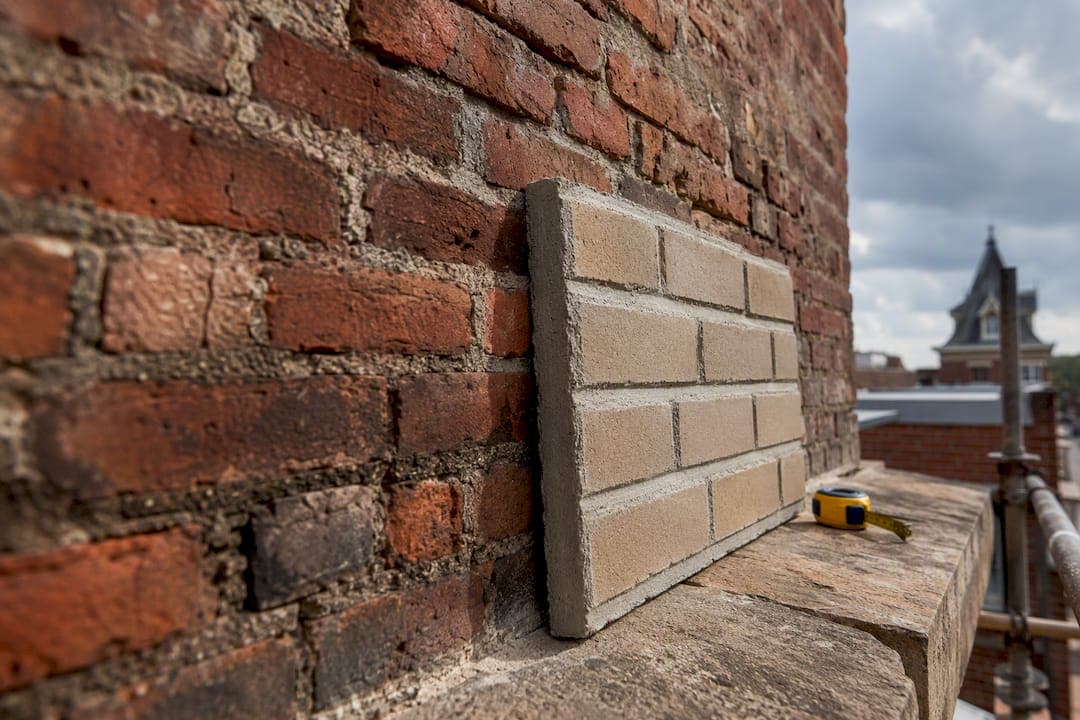
Sample panels matter because they give both homeowner and CAR reviewer a physical benchmark for mortar color, joint profile, and texture before the crew touches the rest of the wall.
How to vet and hire a preservation-minded masonry contractor
Not every mason is comfortable working on lime mortars or soft historic brick, so the vetting conversation should go beyond price. Ask direct questions about their process before signing anything.
- Ask what mortar mix they plan to use and why it matches your building's era.
- Request a small sample panel before committing to the full project.
- Ask whether they use hand tools or controlled pneumatic equipment for mortar removal, not aggressive grinders.
- Request references from other historic district projects in Richmond.
- Confirm insurance coverage and ask for a written workmanship guarantee.
Require a written mortar specification, dated sample panel photos, a project schedule, and proof of insurance before work starts. Watch for red flags: a contractor who wants to paint unpainted brick, pushes blanket water-repellent coatings as a cure-all, or plans to grind out joints with a power saw without ever mentioning a mockup panel.
Pro Tip: Ask to see a completed repointing job in person rather than only photos; mortar color often reads differently in daylight than in a portfolio picture.
What to expect: project stages, timeline, and cost factors
A well-run masonry project moves through a predictable sequence, and knowing the stages helps you plan around CAR's calendar.
- Initial assessment identifies the extent of deterioration and whether the work is visible from a public right-of-way.
- Sample panel establishes mortar color, texture, and joint profile for approval.
- CAR submission, if required, follows the panel approval and needs lead time for the monthly hearing.
- Repair execution follows the approved specification, working section by section.
- Final inspection and punch list confirm the work matches the sample and closes out any remaining items.
Administrative approvals for small, in-kind repairs can move in days to a couple of weeks, while a full Certificate of Appropriateness review often takes several weeks before construction can begin, per CAR's own process. Cost swings mainly on the extent of repointing needed, whether scaffolding or lift access is required, mortar analysis, and how many units need replacement to match.
A Richmond repointing project done the preservation-first way
A skilled masonry contractor often starts historic district projects with a free estimate and a condition survey of the affected walls. From there, the contractor develops a mortar match and installs a sample panel so the homeowner and, when the work is visible, CAR staff can review color and texture before full-scale repointing begins. When a Certificate of Appropriateness is needed, Heritage Masonry & Brick coordinates the submission alongside the homeowner rather than leaving that step to guesswork.
Sample panels and a written mortar spec may serve as the acceptance criteria for the finished job, and some contractors offer a workmanship guarantee. Homeowners should keep the approved panel photos, mortar spec, and any CAR correspondence on file for future maintenance or resale.

Why compatible repairs beat quick fixes
I've seen how tempting a fast patch looks next to a slower, panel-approved repair, but a mismatched mortar or a sealant coat almost always costs more to undo later than it saved up front. Document your building's condition now, and talk to CAR staff early. That single habit prevents more historic masonry damage than any product on the market.
— Thomas
How Heritage Masonry & Brick can help with your Richmond masonry
Richmond homeowners get a local team that treats sample panels and written mortar specs as standard practice, not an upsell. Some masonry contractors offer repointing and tuckpointing, brick repairs, structural repairs, and chimney repair, each built around matching your building's existing brick and mortar rather than a one-size-fits-all mix.

- Consider requesting a free estimate before any work is scheduled.
- Ask for a sample panel on visible repointing work.
- Confirm coordination with CAR if your project faces a public street.
- Get a written workmanship guarantee where available.
For repointing and mortar matching specifically, visit the repointing and tuckpointing page to start the estimate process, or explore brick repair services if your project involves damaged or spalling units.
Key resources for verifying Richmond masonry rules
For technical standards, review the NPS briefs on repointing and cleaning masonry. For local process questions, consult Richmond's Commission of Architectural Review directly, and keep good gutter and flashing maintenance in mind, since roof-related water intrusion is a common root cause of masonry failure that preservation guidance addresses first.
Sources
- Preservation Brief 2: Repointing Mortar Joints in Historic Masonry Buildings
- Preservation Brief 1: Assessing Cleaning and Water-Repellent Treatments for Historic Masonry Buildings
- Commission of Architectural Review | Richmond
FAQ
Do I need CAR approval to repoint brick in a Richmond historic district?
Visible repointing on a street-facing wall generally requires review by Richmond's Commission of Architectural Review, though small in-kind repairs may qualify for administrative approval. Meeting with CAR staff before submitting is the fastest way to find out which path applies to your project.
What mortar should I use on historic brick in Richmond?
Lime-based mortar is generally preferred because it stays softer and more vapor-permeable than the surrounding brick, letting moisture escape instead of trapping it, according to NPS repointing guidance. Portland-cement-heavy mixes are often too hard for older, softer brick and can accelerate deterioration.
Can I pressure wash old brick to clean it?
High-pressure washing is discouraged on historic masonry because it can etch the brick surface and drive water deeper into the wall, per NPS cleaning guidance. Gentle methods with test patches are the safer starting point.
How long does a Certificate of Appropriateness review take in Richmond?
A full COA review often takes several weeks before construction can start, since CAR meets monthly and expects complete applications well ahead of the hearing date. Small, in-kind repairs handled administratively can move faster.
Does Heritage Masonry & Brick offer sample panels before a full repointing job?
Yes, Heritage Masonry & Brick builds sample panels into its repointing process so homeowners can approve mortar color and texture before full-scale work begins. Every completed project also carries a 5-year workmanship guarantee.