
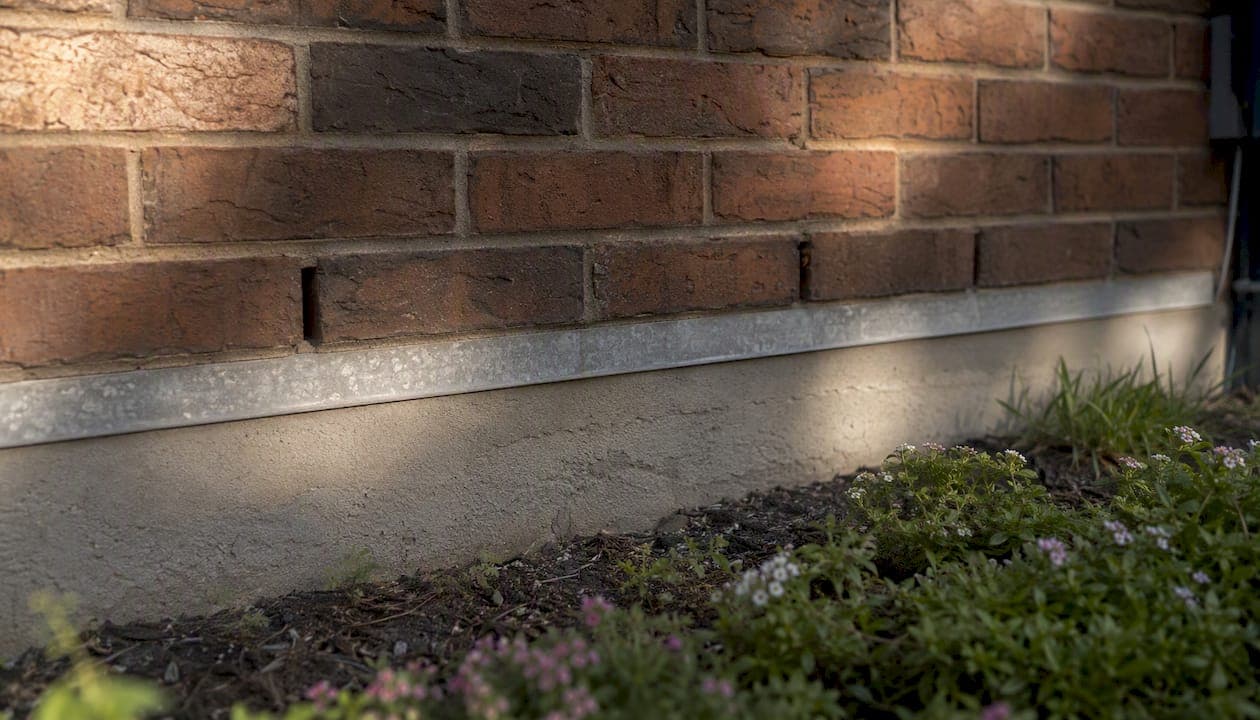
A weep hole is a small, intentional opening at the base of a brick veneer or cavity wall that lets trapped water drain out and lets air move through the cavity to dry it. If you take one action after reading this, make it this: keep weep holes clear of debris and confirm they sit directly above the flashing. That single check prevents the majority of hidden water damage we see in Richmond homes.
Weep holes do two jobs at once:
- Drainage — they release water that gets behind the brick before it reaches your framing or drywall.
- Ventilation — they let air circulate through the cavity so residual moisture evaporates instead of sitting against the sheathing.
Seeing water trickle out of a weep hole during a hard rain is normal. It means the drainage system is doing its job), not that your wall is failing. What's not normal is that same wall staying damp inside because someone caulked the weeps shut for a cleaner look.
Key Takeaways
Weep holes only protect a wall when they stay unobstructed and are positioned directly above the flashing that channels water to them.
| Point | Details |
|---|---|
| Function is dual | Weep holes drain water and ventilate the cavity, both are needed to prevent rot and mold. |
| Placement above flashing | Weeps must sit directly at the flashing line, spaced roughly 16 to 24 inches on center. |
| Mortar droppings are the top failure | A cavity packed with construction debris causes more blockages than the weep type itself. |
| Never seal a weep hole | Use screened inserts for pests instead of caulk, mortar, or permanent covers. |
| Call a mason for persistent issues | Heritage Masonry & Brick clears cavities, corrects flashing, and repoints without blocking weeps. |
Table of Contents
- What Is the Function of Weep Holes in a Brick Wall?
- What Are the Different Types of Weep Holes?
- Where Should Weep Holes Be Placed?
- How Are Weep Holes Installed and What Goes Wrong?
- How Do You Fix Blocked Weep Holes?
- Is It Safe to Cover or Screen Weep Holes?
- When Should You Call a Mason for Weep Hole Problems?
- When to Call Heritage Masonry & Brick for Weep Hole Repairs
- Frequently Asked Questions
- Sources
What Is the Function of Weep Holes in a Brick Wall?
Weep holes are one component of a rain screen drainage system, not a stand alone feature. Brick veneer is not waterproof. Wind driven rain gets past the outer wythe more often than most homeowners realize, and the wall is designed around that fact rather than against it.
Here's the path: water that penetrates the brick face runs down the inside of the cavity until it hits a strip of flashing, usually installed at the base of the wall, above windows, and at other transitions. That flashing directs the water sideways to the nearest weep hole, where it exits. Meanwhile, air entering through the same openings keeps the cavity ventilated so the wood, sheathing, and insulation behind the brick can dry between storms.
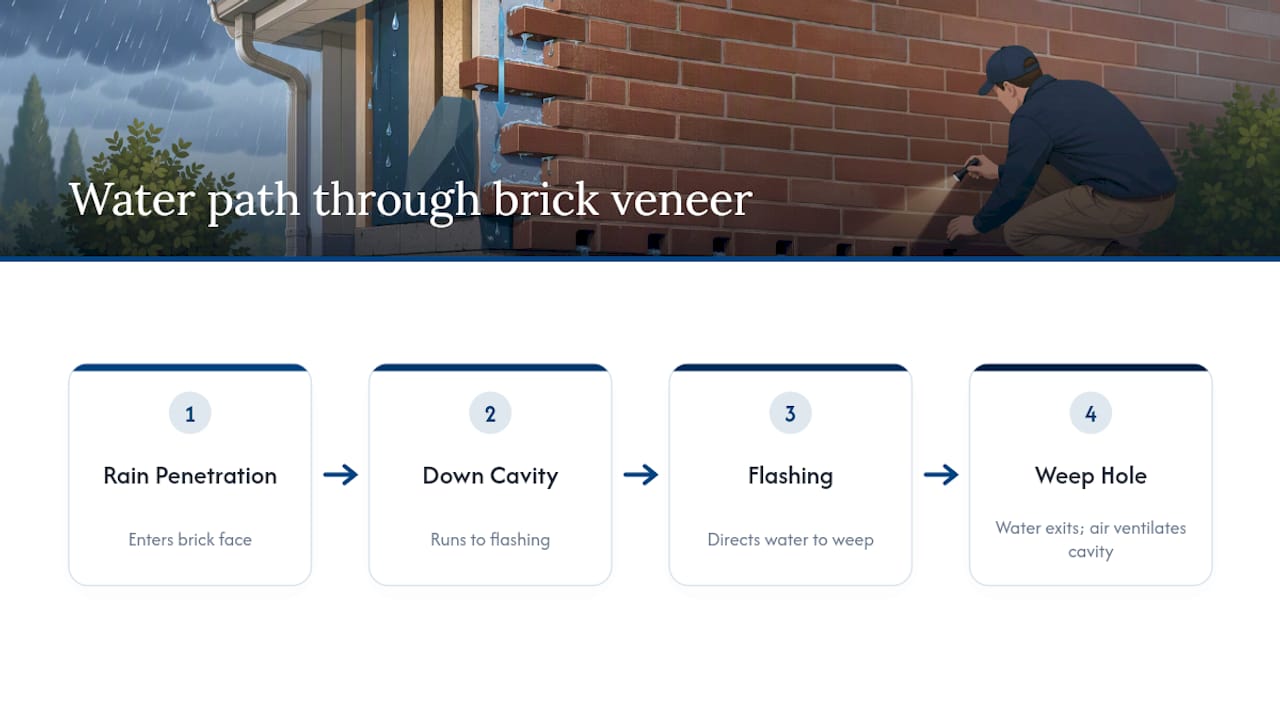
Picture the wall in cross section: brick veneer on the outside, an open air cavity roughly an inch wide, flashing sloped toward the exterior, and the weep hole sitting right at that low point. If the weep is above the flashing instead of at it, water has nowhere to go but sideways or down into the wall assembly.
Pro Tip: During the next heavy rain, walk your foundation line and look for water beading or dripping from the weep holes. If you see it, the system is working. If you see damp brick with no visible discharge, that's your cue to check for a blockage.
What Are the Different Types of Weep Holes?
Not every weep hole looks the same, and the type installed affects how easy it is to inspect and how likely it is to clog. The common types recognized by masonry guidance include:
- Open head joint — a mortar joint left completely unfilled between two bricks. Easiest to spot and verify, and least likely to clog since there's nothing narrow to plug.
- Louvered vents — small aluminum or plastic inserts with angled slats. They look tidier than an open joint and discourage pests, but the slats can trap mortar dust over time.
- Rope wicks (sash cord weeps) — a length of cord laid in the mortar joint during construction, later pulled or left in place to wick water out by capillary action. Effective but harder to verify visually once the cord is gone.
- Tubes — small plastic or metal tubes inserted into the joint. Convenient to install, but small-diameter tubes are the type most likely to plug with mortar droppings and the hardest to clear once blocked.
- Cellular vents — pre-formed plastic units with internal baffles that block insects while allowing airflow and drainage. More durable than a bare tube.
- Corrugated plastic weeps — ribbed strips that create multiple drainage channels in one insert, often used as a hybrid that resists collapse better than a single tube.
Open head joints remain the gold standard for reliability precisely because there's nothing to clog. Where pest exclusion matters more, a cellular vent or corrugated weep paired with mesh is the practical compromise.
Where Should Weep Holes Be Placed?
Placement matters more than most people assume. Weep holes belong directly above the flashing line, not an inch or two higher, and they need to sit near window and door openings where flashing diverts water toward the wall's exterior face.
Masonry guidance recommends spacing weep holes about 16 to 24 inches on center, with open head joints often set at the wider end of that range, around 24 inches, since each opening drains more efficiently than a narrow tube.
A few things to keep in mind:
- Local building codes and manufacturer flashing details can tighten or loosen that spacing.
- Weep holes are not a substitute for movement joints — those control thermal and shrinkage movement and need to stay free of mortar, unlike weeps, which need to stay free of debris.
- Every run of flashing needs its own weep outlet; a long flashing strip with no weep at its low point just becomes a hidden reservoir.
How Are Weep Holes Installed and What Goes Wrong?
During construction, weep holes are formed one of a few ways: leaving a head joint open as the wall is laid, setting a louvered vent into the joint before the mortar sets, bedding a tube or rope wick in place, or inserting a corrugated weep channel that spans the joint width.
The single biggest cause of weep hole failure isn't the weep itself, it's what happens above it. Common mistakes include:
- Mortar droppings falling into the cavity during construction and piling up over the weep before the wall is even finished.
- Weeps installed above the flashing line instead of directly at it.
- Undersized tubes that choke on debris a wider opening would pass through.
- Tubes set flat or angled upward instead of sloping outward, which traps water instead of releasing it.
- Gravel or mesh dumped into the cavity in a way that blocks the weep rather than protecting it.
Pro Tip: A mason can cut mortar droppings dramatically by beveling the mortar bed away from the cavity side and scraping off any mortar that squeezes through before it sets. Laying a strip of nylon mesh or fiber above each weep during construction catches falling debris before it reaches the opening.
How Do You Fix Blocked Weep Holes?
Start by inspecting from outside during or right after a rain. Active drainage at the weep line means the system works. A dry weep hole on a wall that's been rained on, paired with damp interior drywall, points to a blockage or a flashing problem.
- Locate every weep hole along the affected wall section and check each one individually. Blockages are rarely uniform.
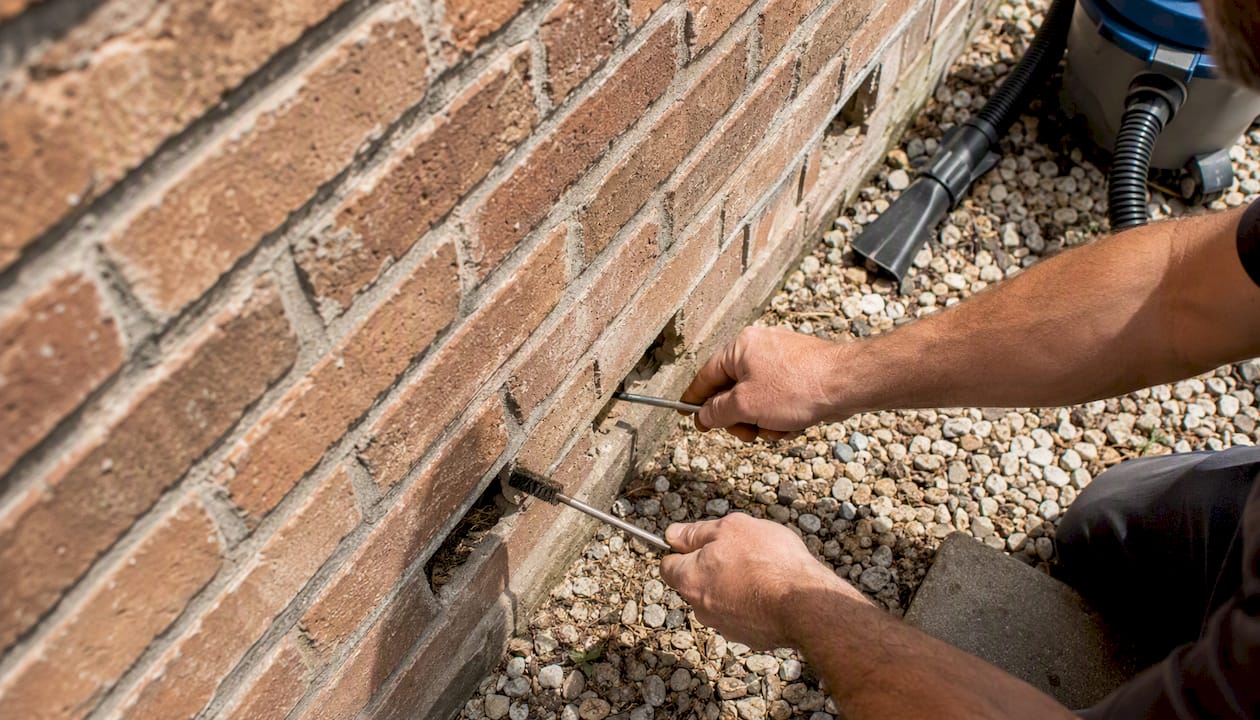
- Remove loose surface debris by hand or with a thin plastic probe. Never use a metal wire; it can chip mortar or dislodge flashing.
- If the opening allows, run a shop vacuum on the weep to pull out packed dust and mortar dust further inside the cavity.
- Try a gentle water flush from a garden hose set to a light stream. Stop immediately if water backs up rather than draining.
- Leave the opening uncovered. Never seal a cleared weep hole with caulk or mortar; that undoes the entire repair.
A few safety notes belong here too: use a stable ladder and never lean into a weep hole with force, since brick and mortar around these openings is thinner than the surrounding wall. If you find the cavity packed solid with mortar droppings, recurring interior leaks despite clearing the exterior, or flashing that's missing or installed backward, stop the DIY approach and call a mason. Those conditions usually mean opening the wall.
Basic tools for routine maintenance: a plastic probe or thin dowel, a shop vacuum with a narrow attachment, flexible tubing for a controlled flush, and screened vent inserts if you're upgrading an old open weep to something more pest-resistant.
Is It Safe to Cover or Screen Weep Holes?
Never seal a weep hole permanently. Caulk, mortar patches, or decorative covers block both drainage and airflow, and that trapped moisture is exactly what leads to rot and interior staining down the line.
If pests entering through open head joints are the concern, purpose-made screens solve that without blocking function. Stainless steel mesh or louvered plastic inserts let water and air pass while keeping insects and small rodents out.
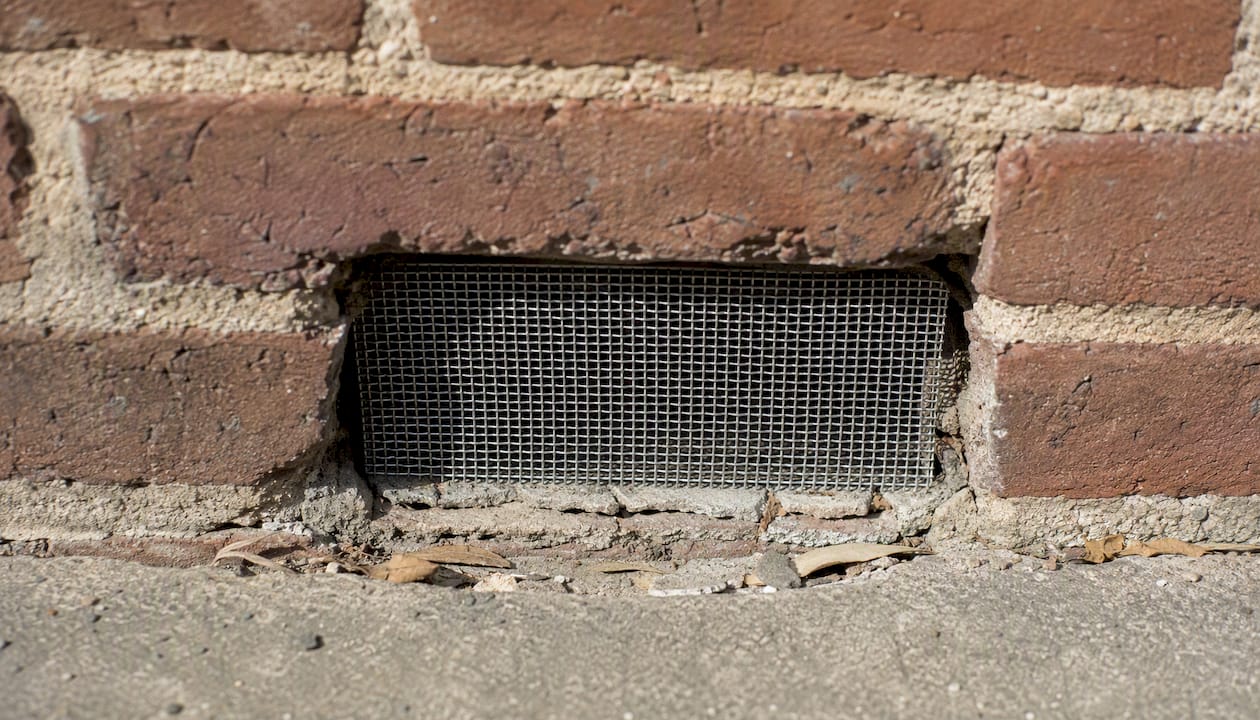
Pro Tip: Stainless steel mesh costs more up front than a plastic screen but holds up far longer against weather and won't rust into a crumbling mess after a decade outdoors.
If you use a seasonal decorative cover for appearance, remove it before wet months arrive. A cover left on through fall and winter defeats the purpose entirely.
When Should You Call a Mason for Weep Hole Problems?
Run through a quick check before deciding: Is water actively discharging during rain? Is there interior dampness near the wall? Can visible debris be cleared without touching mortar or brick?
If those answers are yes, no, and yes, you're likely fine handling maintenance yourself. Call a mason when you notice interior leaks that persist after clearing weeps, a cavity that appears packed solid with mortar, flashing that looks missing or misaligned, or repeated blockages after DIY attempts.
When you do call one in, ask them to confirm weep clearance, inspect flashing condition, and use a repointing technique that preserves rather than covers the existing weep holes.
A Mason's View on What Actually Fails
On most service calls involving damp brick, the weep holes themselves aren't the problem. What we find is a cavity packed with mortar droppings from the original build, or flashing that stops short of where the weeps sit. Over 25 years of repair work, that's been the most consistent failure point, more than any single weep type or spacing choice.
That's why our inspections always start at the cavity, not the weep opening. Clear the wall, confirm the flashing, then decide what repair the weep line actually needs.
When to Call Heritage Masonry & Brick for Weep Hole Repairs
Heritage Masonry & Brick handles the part most DIY guides can't: opening a wall section to confirm what's actually blocking the cavity and fixing it correctly the first time. We offer inspection and repair services specifically for blocked, missing, or improperly placed weep systems across Richmond.

Services relevant to weep hole problems include:
- Repointing and tuckpointing that restores mortar joints without accidentally sealing weep openings.
- Brick repair for damaged veneer sections and flashing correction.
- Full cavity clearing and installation of screened vents or corrugated weep channels where old tubes have failed.
- New brickwork installation with correct weep and flashing detailing built in from the start.
Every project comes with a free estimate and a 5-year workmanship guarantee. If your wall is showing damp patches or you've spotted mortar packed against the weeps during a self-check, get a professional brick repair evaluation before the next storm season.
Frequently Asked Questions
Do all brick walls have weep holes? Brick veneer over a wood or steel frame typically requires them, while solid masonry construction may not use the same cavity drainage system. If your home has a veneer wall, weep holes should be visible along the base and above window heads.
How many weep holes does a wall need? Spacing usually falls around 16 to 24 inches on center along the base of the wall and above any flashing line, though exact counts depend on wall length and local code requirements.
Can I install weep holes in an existing wall that doesn't have them? Yes, though it requires cutting into the mortar joint and confirming that flashing exists behind the brick first. This is a job for a mason since it involves opening the wall without damaging surrounding masonry.
Why is water coming out of my weep holes? That's normal during and after rain. It means water that got behind the brick is draining out as designed rather than sitting inside the wall assembly.
What happens if I paint over or fill in weep holes? Sealing them traps moisture inside the cavity, which leads to interior dampness, wood rot, and mold growth over time. Weep holes should always stay open and visible.